







Published: February 24, 2026
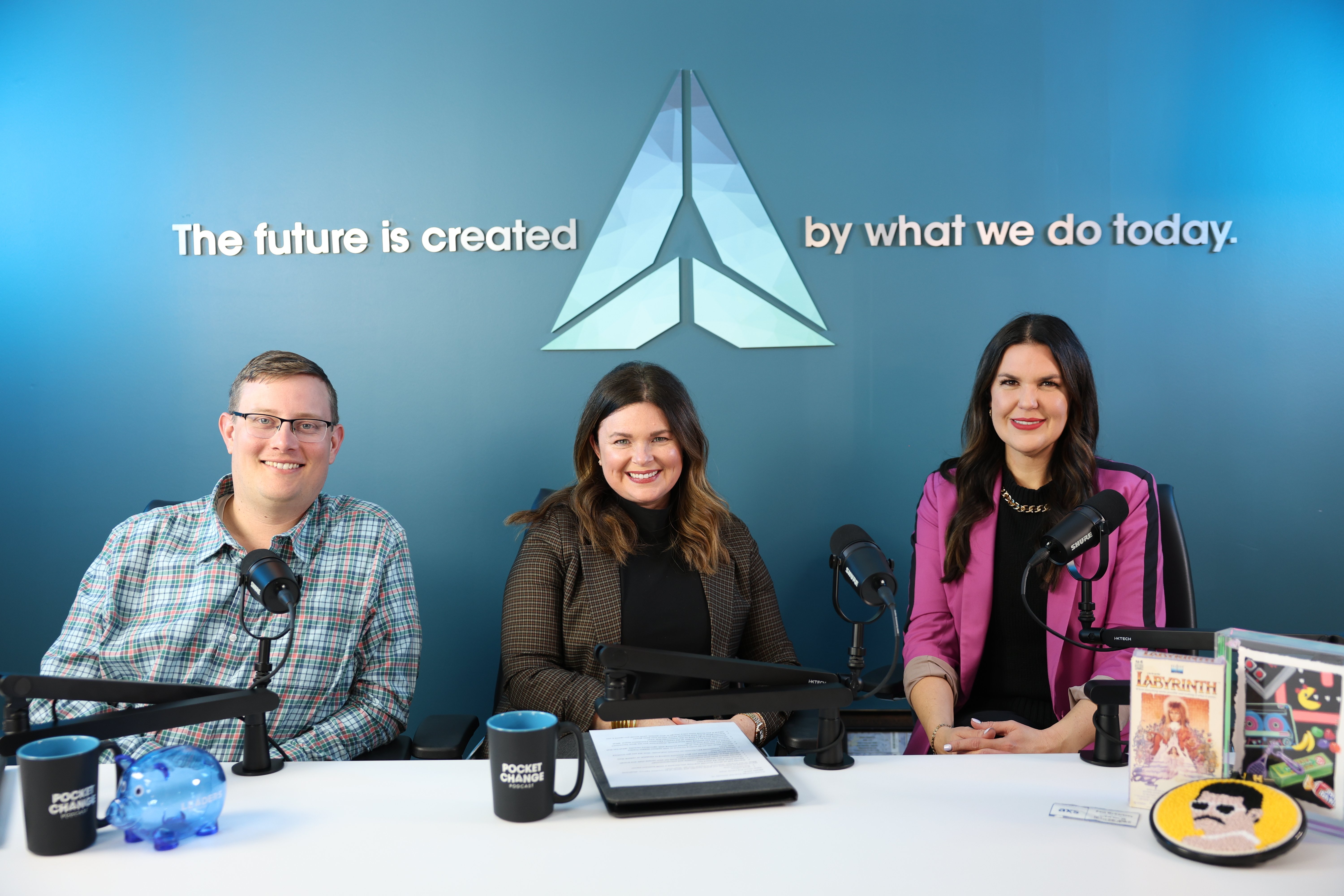
Episode 76: Pocket Change Podcast
Key Takeaways
- Strong company culture starts with genuinely caring about people and hiring for kindness, intelligence in a specialty, and work ethic.
- Authentic creativity wins, so build what you love and let your unique perspective shape your work and brand.
- Investing in local industries like music and agriculture strengthens the entire West Tennessee community.
- True financial success includes giving back and intentionally supporting the arts and the community around you.
Summary
What is B3 Creative Agency?
B3 is a local creative agency in West Tennessee that offers marketing services, including graphic design, brand development, videography, photography, strategy, and more. Their primary clientele includes tourism, agriculture, and industrial companies. B3 stands for Big Bad Brands to signify the relationships they have with their entrepreneurial clients who are striving to succeed with boldness and ingenuity.
Why is it important to have a strong work culture?
Want to learn more about Stephanie and the work her team at B3 is doing in West Tennessee? Visit b3creativeagency.com to explore their past work, services offered, company mission, and see first hand what makes them stand out among creative agencies.
What role can local business play in strengthening their communities?
Stephanie believes local businesses have a responsibility to elevate the people and industries around them. For B3 Creative, that has meant building platforms like Jackson Hidden Tracks to spotlight West Tennessee’s music scene, helping organize events such as Blue Suede Rockabilly Weekend to honor Carl Perkins’ legacy, and partnering with agriculture organizations to support farmers and promote sustainability. Through B3’s focus on tourism, music, and agriculture, Stephanie sees firsthand how investing locally can strengthen the economy, support small businesses and farmers, and showcase what makes West Tennessee special.
That same commitment to community extends to education. Through Stephanie’s service on the Leaders Education Foundation board, she supports not only traditional collegiate scholarships, but also technical education programs. She believes expanding access to diverse career pathways helps strengthen the local workforce and create long-term opportunity for future generations in our community.
The Pocket Change Podcast is presented by Leaders Credit Union. To learn more about Leaders, visit leaderscu.com.
Listen and Follow


Full Transcript
Shea:
Hey, this is Shea.
Carrie:
And this is Carrie.
Shea:
Welcome to the Pocket Change Podcast.
Carrie:
Where you'll learn better ways to spend, save and invest, and take control of your financial journey.
Shea:
All right, Carrie, I got a little bit of this or that, for you.
Carrie:
Okay.
Shea:
All right. IPhone or Android?
Carrie:
IPhone.
Shea:
Right. Nike or Adidas?
Carrie:
That is a hard one because I literally wear both of them. But I'll just go with Nike.
Shea:
All right.
Carrie: Just do it, right?
Shea:
That's exactly. Zaxby's or Chick-Fil-A?
Carrie:
Chick fil A.
Shea:
And credit unions or banks?
Carrie:
Credit unions.
Shea:
Exactly. Yeah. So those are some popular brands that we're familiar with. You know it takes marketing... It takes advertising for people to build that awareness. And so we're going to talk to someone who's experienced in that today.
Carrie:
That's right. Today we will talk to Stephanie with B3 Creative and learn a little bit about why she named her business B3.
Shea:
Yeah. And she's got a really good workplace culture and a lot of good insights. She's going to share.
Carrie:
She sure does.
Carrie:
We're excited to welcome our guest, founder and owner of B3 Creative Agency, Stephanie Riley. Welcome to Pocket Change, Stephanie.
Stephanie Riley:
So happy to be here, Carrie.
Carrie:
So tell us a little bit about yourself and how you became a business owner.
Stephanie Riley:
Well, so I have B3 Creative agency in downtown Jackson, and I've been an entrepreneur for a while through many things. It actually started in fifth grade. Maybe we'll get to that later. But, so I had an agency prior to this one, and it was more print and design focused and then later sold it to another firm in town, was a partner there for a while, and then realized how much I missed creating culture. How missed that, how much I missed the fact that I could create jobs. And so even though it was really cool, to make stuff, and to talk to people… I miss those things. So I started at B3 Creative Agency. So at B3 we focus on tourism, agriculture and industrial clients. We have a few outside of those, specific areas, but those are the main things we focus on.
Shea:
So focusing on websites, design, video, all that?
Stephanie Riley:
Yeah, all those thing. all those traditional marketing services and then some of the things that you might not expect.
Shea:
So okay. And so what does B3 stand for?
Stephanie Riley:
Oh that's a fun question. So it stands for Big Bad brands. And you might think well why did you name it that? And so at the time we didn't have these focuses identified. And we were working with a lot of small businesses. And I started thinking, what would, you know, what does it take to be a business owner? What does it take to go out and do it? And takes a lot of guts. It takes scrappiness it takes just a lot.
Shea:
Risk!
Stephanie Riley:
So I thought, that's pretty big and bad. So big bad brands. That's where it came from.
Carrie:
Okay, so have you always been creative and entrepreneurial? Entrepreneurial. That's a big word.
Stephanie Riley:
I think so. So my parents used to tell me when I was a kid that I would wake them up at 6 a.m. on a Saturday because I needed my crayons or markers or whatever it was, because I wanted to be creative. Whether that was drawing or music, which I play later in life. Yeah. I was always doing something creative, and that took different forms throughout my life. And, and I've always been an entrepreneur as well. I think it started in fifth grade. So, it just kind of made sense to me. I thought, well, I would like to make some extra money. And so I had this catalog called Oriental Trading Catalog. I think it still exists today.
Shea:
It does.
Stephanie Riley:
And, and, you know, back in the 90s, trolls were really in, these little creatures with crazy hair. So I found I flipped through the catalog and there were troll rings, and I could get 12 of them for, I don't know, 12 bucks or something. And so I sold them for $1.50 each out of a little going to grandma suitcase. And that was the beginning of my career as an entrepreneur. And so over the years, you know, I learned a little bit more about it. And, yeah, it's just kind of stuck ever since. And, you know, it comes naturally to me because I have grandparents. Both sets of my grandparents were entrepreneurs. My parents were entrepreneurs. My dad was a podiatrist, and he had at one time three different clinics. And, so it was pretty cool just to grow up with parents that did it and have grandparents. And so it, you know, ran in my blood.
Carrie:
Yeah, it sounds like it. What was your troll selling business name? Did you have a cool name?
Stephanie Riley:
No, I wish I was that cool. I just was, like, trying to make that hard cash, you know, $0.50 here and there.
Carrie:
So are you, like the guy wearing a jacket? Yeah. Open it up.
Stephanie Riley:
I should have been. So. Yeah. No business name then. Just, you know, it was just something fun and interesting. And that's what I did.
Carrie:
Very smart. Already starting off very young. So where does your inspiration come from for your unique style and brand?
Stephanie Riley:
I love that question. So and it's the answer has evolved through the years. So I used to think like what should I do and what's what are other people doing? And then as I got older, I realized I kind of want to do what I want to do. And there's this man named Rick Rubin. He's a big time producer in music. Some of you may have heard of him, and he doesn't know how to play an instrument. And he doesn't know a lot technically about music, but he basically says, I make what I like, and I make what sounds great to me. And if other people like it, great. And so that really resonated with me because I thought, you don't know what other people are thinking. And so why try to work so hard to figure out what's in somebody else's mind when you have your own mind and you can create. And so that's reflected in our company. When you walk in the door, you're going to see our air ducts painting hot paint. You're gonna see yellow doors. You're going to see stuff like I have here. Just spread everywhere. And so I basically just do what I want to do and hope people like it. And typically, it kind of has worked out so well.
Carrie:
I've personally taken a tour and it is such a unique place. I love it, it's a lot of fun.
Stephanie Riley:
Well thank you. Thanks so much. And we encourage our employees to do the same, you know, reflect your personal style through how you dress or what you put on your desk. We encourage everybody to kind of embody that at the office as well. And that also translates to client work, you know? So yeah.
Shea:
So that goes into the company culture a lot. So why is that so important to you?
Stephanie Riley:
Well, we've all called the place and they picked up the phone and you could tell they hated their life. And we've all called a place and they pick up the phone and you think, well, what a nice person. And so from the top to the bottom and anywhere in between every position, it matters if your company culture is not, positive. And so to me, it’s the most important thing you have in your company. It doesn't matter if somebody's smart, if they're not a good culture fit, it doesn't matter. You know what your resources are... You've got to have a culture that’s really strong and really positive if you want to do good work, if you want to serve your clients well. So it's paramount for me.
Shea:
I could say it's big and bad.
Stephanie Riley:
It’s big and bad!
Carrie:
Your culture is very unique. At B3, what do you look for when you're hiring someone?
Stephanie Riley:
Well, that answer has changed through the years, but, the most important things are being a kind person. Somebody once told me, you cannot teach kindness. Either a person's kind or they're not. So be a good human. Are they intelligent in the area they need to be? So if you ask me to do accounting, I'm not intelligent at all. But there's things I'm good at. So if someone's, needs to be creatively intelligent, that's important. Because it's also very difficult to teach, like, taste and things like that. And then last, like, are they, you know, do they have the work ethic that you need? Are they going to come in and really give their all so those are the three basic things we do. But we also have a really unique hiring process. So it starts with a phone interview, which is not that out of the ordinary. And then we have an in-person one hour interview. And a lot of times companies kind of stop there. Maybe it's a little longer than an hour, but you're sitting across the table from someone trying to figure out if they're going to be a good fit, and it's a huge, huge decision to make. So about probably 4 or 5 years ago, I implemented a third step. And so what we asked people to do, and these are our top candidates. They come in and they spend a day with us and they actually do real work. So the day starts with them spending time with each employee. And I tell them, ask him anything. Ask questions about me. Ask questions that you just really want to know. Everybody here knows they can be honest, and then we'll have lunch with them. And then we give them some projects because we want them to know what the work is actually like. Is it, difficult? Is it something that they're going to enjoy to come easy to them? And then it allows us to evaluate some of their work and then get a flavor for what the culture is really like as best as you can. Because when you choose to work somewhere, it's a huge deal. You're spending most of your waking hours at that place. So we felt like it was good for us to really make a good decision on our end. But it's also really good for the candidate so they can feel just a little more ease about joining the company.
Carrie:
And they know what they're getting into.
Stephanie Riley:
That’s right? Absolutely. So that's how we hire people and that's been really successful. I'm not perfect at it. There's definitely going to be things I miss, but it's really helped us recruit a very good team over the last few years.
Carrie:
So what advice would you give someone who is looking to reestablish their culture or brand?
Stephanie Riley:
So it's very simple. When it comes to having a positive company culture, the reason is simple is you just have to care about people and not for some kind of reward. Or well, if I act like I care about them, something will happen, but just to genuinely care about people. I mean, we care about everybody else in our life. We hope. And so when you care about people and they genuinely know it, it all just kind of works out. And we show that in a lot of different ways. Whether that is and, you know, for somebody to give them advice, it might be hearing that, you know, someone's wife had surgery. And even if you have to make a note to ask, like following up, how did that go? It's those little things that add up, you know, these big grand gestures, a Christmas bonus... I mean, those are great, but it's those little moments that you take to invest in someone's life to truly care about them, that add up and help contribute towards a positive culture where we do other things. We have Friday afternoons off. One of the things about my team… I have a younger team and, you know, this younger generation, they've really figured it out. Okay, that might be your generation. They have figured out like work life, work life balance is so important. And I'm a little more of a work all the time kind of person. But I know that work life balance is really important to most people. And so it was important for me to create a culture where that's really valued. So having Friday afternoons off has been great.
Stephanie Riley:
I thought, well, I'll just stay at work and get more done. Oh no, I've loved it. I picked my son up from school, go do things and for the team. They're going to do things that you don't usually get to do when we're all at work. And so that's been one of the things I've added, as a benefit to the company. So there's many things that you can do to create that positive culture, but your intentions are the first. That's number one. So having that intention of truly caring… it really just is the baseline for it all.
Carrie:
And I think people know if you're being authentic with that as well.
Stephanie Riley:
They do.
Carrie:
Do you find that that your team works harder Monday through Thursday to be able to, you know, have that half a day on Friday?
Stephanie Riley:
Yeah, I think so. When we talked about it, I said, hey, you all, you know, we're going to be going back to 38 hours because we have a 30 minute lunch. So it's 8 to 5 with 30 minutes. And so we're going to scale back our hours of 38 instead of 40. I'm going to pay you for 40. And so to do that we're going to have to really, you know, make sure we still get all of our work done. And so people didn't mind hearing that at all. And it all gets done. And I told them, you know, if anything ever changes we’ll reevaluate. But it's been really positive. And because it's a good culture, people want to show up and they want to give their best, so it’s been really good.
Shea:
And the fact that you included your team on that discussion. And things like that, you know, as part of that intentionality that it takes.
Stephanie Riley:
That’s right.
Shea:
And I think you mentioned something similar to, you know, credit unions where, you know, people over profit, you know, and that's really the mindset you have is like, yeah, we're… we have this bottom line and we have to make money as a business. But I want to put my people first and that's, you know, really important.
Stephanie Riley:
It is.
Shea:
So you mentioned a couple things y'all are involved in… tourism and music. So how did you get involved in those two industries?
Stephanie Riley:
Oh, that's an interesting story. So for a while I thought, what am I going to really focus on? You know, we worked with a lot of different great businesses. But with this type of work, if you can really focus on a few things, you can become really good at them versus, you know, being okay at several things. And so I hadn't really found that one thing that I thought, I'm so passionate about this, I'm so excited. And Covid happened, as we all know and don't want to remember. And what happened is there was a lot of money distributed to different organizations, as you know. And one of those was local tourism office. And we received an RFP request for proposal for different things that we could do for Visit Jackson in town. And one of them was around music. How can we elevate our music community? So we sent a proposal in and we were able to win that. And the really cool thing is the director at the time said, hey, what do you, what do you want to do? Just bring your ideas? It wasn't one of those things that was highly directed. And so I went back to the team and I started thinking about this whole music scene, the term music scene. And when we all think about that, there's really like if I said, hey, where do you go find information about the national music scene or Memphis, like, where would you go? Right. It's just kind of this, word that's really not attached you know... It's really not attached to anything. And so I thought, what if we actually created a brand for Jackson's music scene? What if there was this centralized, non-biased place for people to go find the itinerary, go find an artist, whatever it is. And so we pitched that to them and they said, all right, let's do it. And so I've never seen this done before is a little bit of a risk. But the reward has been really good. So it's called Jackson Hidden Tracks available on social media, website, everything. And you know, it's been great. It took a little while to earn the artists’ trust, you know? Hey, what's this all about? But it's been, it's been really good, and it's evolved over the years. And so now people know they can go to this website, they can find great content, whether it's, how to host a festival or it's, how to find an artist that will play on the weekends, or who has original music or, you know, social media, we have a weekly itinerary that we collaborate with.
Shea:
Yes. Seeing the music that's playing on the weekends at the venue. That’s right.
Stephanie Riley:
That's right. And so that's been really incredible, and it's been neat to see the artists say, hey, this has been really good for me or something… finally, for our music community. So getting that feedback been very rewarding for me. And then we've also seen people travel in. We had someone that wrote, I think it was a comment on Facebook or something that said, oh wow, I didn't know this was here. I've been looking for somewhere to travel to listen to live music. That's great. You have it seven days a week in your area.
Shea:
Wow!
Stephanie Riley:
So, the reward has been really good. So when I had that project take off, I realized this is what I love. And finding ways to support our, you know, creative community has been one of the most… it's been a favorite thing that I've done since I've had the company.
Shea:
That’s great.
Carrie:
So okay. Yeah. So how has working with local brands changed how you see West Tennessee?
Stephanie Riley:
Yeah. So that's a great question. And I will say again Visit Jackson's probably was the client that allowed us to get the most exposure because you know that organization represents Madison County. And just getting to see all these different businesses in this area because we're interviewing them or we're taking photos. That's really giving me tons of exposure, and it's giving our team tons of exposure. What we've got in our area. So many people join our company and they've maybe gone to Union or they've gone to another college where they kind of have a small circle that they went around. And so when they come to work here and they're working with these clients, whether it's Visit Jackson or it's Dixie or whomever, they just learn a lot more about the community. So for me, I've learned so much about the community just through this work, and it's helped me love it even more. But it's also been cool to see the team just learn and say, I didn't even know this was here, that we could do this. So it's been really, really good.
Carrie:
It's great.
Shea:
So what kind of… what's coming up with Jackson Hidden Tracks? We got some exciting some coming up?
Stephanie Riley:
Yeah. So we just had the Tennessee songwriters qualifying round in Jackson. So for those that don't know, it's a statewide... It's through. The state tourism office… is a statewide event where they have qualifying rounds. There's three different ones. And one of the first rounds starts in different cities… like Jackson. So this year was a little bit different. It had always been in the Carnegie, which was great, but it's a more it's a smaller and more intimate venue. And the new director of it is at Jackson said, let's get more community members out, let's have a party. Let's have people come and see these great, talented songwriters. And so this year, it was moved to Hub City Brewing, and we had a ton of people come out that might not have known about it or been able to come before due to limitations on space. And then we also had a concert with Lolo where she played all of her original music, whether it was songs for herself or songs she wrote for Panic! At the Disco or Fall Out Boy. So it was, a great event, and I love seeing how it's evolved, and it's neat to see the community come out, more community members to see, hey, we got all this talent right here in Jackson.
Shea:
Yeah!
Stephanie Riley:
And then another thing that's coming up that I'm very excited about is the Blue Suede, Rockabilly Weekend. So this is something that we're working with Visit Jackson again on... And basically we all said Carl Perkins is from here, King of Rockabilly. And why are we not doing a rockabilly event? And so we are... It's going to be a full weekend. We're going to have a VIP event on Friday night. We're going to have, a full day of great activities on Saturday, and that's going to include four different shows at Hub City Brewing to include a car show, and many different things that the community can come out and enjoy. And then the next day we're going to have a documentary air about Carl Perkins.
Shea:
Wow!
Carrie:
That will be fun!
Stephanie Riley:
So it's going to be a great weekend. One of the headline artists, for the VIP event is actually Kyle Lacy.
Shea:
Wow!
Stephanie Riley:
So Kyle Lacy is from New York City, and he's coming down to play some music. So we've got, you know, a lot of great talent. And it's really very cool to honor Carl Perkins. People don't understand how influential he's been through the world and still is very influential in the world today. So it's a neat way to honor him, his legacy and also just create a great event for people to come to Jackson and enjoy.
Carrie:
That’s awesome.
Stephanie Riley:
So, that's coming up.
Shea:
Wear are your blue suede shoes.
Stephanie Riley:
That's right.
Carrie:
And when is that event, again?
Stephanie Riley:
It's the last weekend in April and you can visit bluesuedeweekend.com.
Shea:
Perfect.
Stephanie Riley:
…to get the full the itinerary and learn more about it.
Carrie:
Awesome. Okay, so you mentioned you all started working with agriculture recently. So what has that meant for you and your brand?
Stephanie Riley:
So it's funny, when I was in college at UT Martin, it's an ag school and so I was surrounded by agriculture, but I actually majored in fine arts. And so, when I was like maybe a junior or senior, my first freelance project was called Ideas in Agriculture, and it was basically promoting the different ways someone could take a crop and add value. So maybe if you are a corn farmer, you sell the husk to a craft company. So I did that and then time moved on… time moved on. And then about 3 or 4 years ago, a good friend of mine connected me to an ag project, and, when he did, I thought, well, I'm gonna have a little bit of experience, but not a ton. And what I found very quickly is that it’s some of my most favorite work I've done. You know, there's a few things I love so much, but right now, some of what that work includes is we work with mostly national or statewide organizations. We work with a program called Farmers for Soil Health. It's a conservation program that pays farmers for sustainable agriculture practices. So what does that mean? In this specific case, it means, the program pays farmers for growing cover crops. And for those of you that don't know what a cover crop is, I'll quickly explain. So when a row crop farmer grows corn and they've harvested that corn, the earth is just left wide open. And so what you can do is you can plant a cover crop, whether that's crimson clover or radishes or something, and it covers the soil in between those commodities. And it protects the soil or it helps with erosion. It also helps with increasing organic matter. And what that does for the soil makes it healthier. It helps increase yields, which is how much they are able to produce. And so it's this really great thing. And so our job is to market that. We're providing educational resources. We are connecting farmers with technical advisors in their state so that they can learn how to best, use cover crop practice… because it's something you have to learn. And it's one of those things that does take time to get your mixtures right. So, we work with, that organization, we work with Tennessee Soybean and some others. And what I love about it is, and that was not really surprised... But what I have loved so much that I didn't expect is just being able to connect with farmers. So what people may or may not realize is farmers are some of the most resilient, kindest, best people you'll ever meet. I mean, talk about resilience, like you can't predict the weather. You know, we've all heard that saying you never know about the weather in farming. It matters.
Shea:
They're watching it.
Stephanie Riley:
You can work so hard and then the weather can change everything. It can take you from a very profitable year to a very hard year, and just being able to see how hard... our farming community works, how much they have to go through to feed us, to clothe us. It's been really inspirational. And they're just some of the best people. So being able to sit down, get to know some of our farmers has been really rewarding… Rewarding for me, rewarding for our team. It’s just work that just means a whole lot to us. So, and one of the things that we did recently is we hired some team members that have a lot of agriculture experience. So while I went to a college that promoted agriculture… was definitely in school… I didn't grow up on a farm, and there's a lot of knowledge that I'm not going to have to serve my clients well just because I didn't grow up on a farm. And so we've got two employees that live on farms, that are so passionate about agriculture, understand the importance that, it brings to our world. And, that's made me really proud to be able to serve our clients better and have someone that truly understands it. One, of my employees, I'll never forget she pulled up for the interview, and she had a huge bumper sticker that says, I love agriculture, and she did not put it on for the interview. I could tell it had been, you know, there for a little while, but that's just how deep the passion goes, for people that are interested in this. So that's been a really cool addition as we've moved forward with this work.
Shea:
Well, it's definitely a huge industry in West Tennessee. You know, it's all over and they make a big impact. Of course they're feeding us every day and clothing us.
Stephanie Riley:
That’s right!
Shea:
So that's huge. So you also serve as a member on our Leaders Education Foundation board. So tell us a little bit about that and why you choose to give back in that way.
Stephanie Riley:
I love being on that board. And the thing I love about it is, yes, we provide traditional four year scholarships, but it's the broader scope of work that the foundation does. You know, it's easy to say, okay, college scholarship and that's it. But, you know, we're working way outside those boundaries. And one of the things that the foundation does I specially love is close to me is the investment in our technical colleges. So the foundation provides resources for tools, for books and whatever folks need that are maybe going to TCAT. And one thing that I think is so important that people must realize is how great those careers are. You know, there's still a little bit of a stigma of, oh, you're not going to college. Oh, absolutely not. I mean, folks that are going to be welders, they are making great money. They are starting with little to no debt. And it is a fantastic choice. And I'm so happy that the foundation elevates that because it's so important. And, you know, we're offering, we said, offering scholarships, but also just offering exposure and awareness of these great career paths. So that's one of the things I love is just how broad the work is. Whether it's another organization or something else, it's just, it's been really good. I've been very proud to be involved.
Shea:
Oh...
Carrie:
So I was going to say the same thing. Oh, we appreciate it. We're very grateful that you serve on that board. It's been great to work with you alongside all the things that we're doing with the Education Foundation.
Stephanie Riley:
Oh, thank you. My pleasure.
Carrie:
So this is a financial podcast. So I do have to ask you what's best financial advice you've ever been given?
Stephanie Riley:
So my answer may be a little unexpected because it's about spending money. So I was told by someone I don’t know who… you know, make sure you give back to your community and make sure when you can invest money back. And so the last few years, I've been able to really think about that and figure out how do I want to give back. And so our company invests a lot in the arts. So for me, if you are not investing in art and you're not investing in music, you may not have it. And for me personally, I obviously as a creative person connect to those things. But art and music, that is not an easy career path if that is what you're called to do. It's not easy. You have to work a little harder than some career paths to be able to make a living. And so it's really important that me and our company are supporting, visual artists, musicians, whether that's the mural Samantha Wood did on the side of our building or it's helping someone with a tour or some tour expenses, all that's really important. And it's funny, I had a friend, Lauren, Lolo... Many of you all know, she said, you know, if people think about it, what if they weren't allowed to listen to music for a week? If you go to a grocery, you got to go out because there's music or you go in your car, you can't turn it on or whatever, right? You can't turn it on. And it would really help us understand how valuable music is and how we should invest in that. And so that's why it's important for me. So I hope people will consider, when they're able. How can I give back? We can't take it with us. So whether that's, you know, ministry that's creative things like me, I just hope people will think about how they can contribute back when they're able to. So that was good advice that I was given.
Carrie:
Just valuable advice, because to me, the world would be such a sad place without music and art and music is therapy. And I think that's one thing that you and I share together is our passion for music.
Stephanie Riley:
No doubt.
Carrie:
So no, I love that.
Stephanie Riley:
Yeah. Thanks.
Shea:
So if you had some extra change in your pocket what would you spend that on?
Stephanie Riley:
Shea, it is going to be concert tickets.
Shea:
Music. Music again.
Stephanie Riley:
That's right. So let me show you something. All right. If I can get this in frame, these are concert tickets from back in the day when you could actually get an actual ticket. That you can't do anymore.
Shea:
Yeah.
Stephanie Riley:
So instead of keeping mine in a box, I decided to frame them.
Shea:
Wow!
Stephanie Riley:
well, and I've decided I'm going to do more of that this year. I did actually get one from last year. I saw Paul McCartney. I got this little print out.
Shea:
Paper one. Yeah.
Stephanie Riley:
So that's what I'm going to do with my extra money. I'm going to go experience more music, take people with me and have a good time.
Carrie:
I'll go with you.
Stephanie Riley:
Let’s do it, Carrie! Can’t wait!
Carrie:
All right. Well, thank you so much, Stephanie, for joining us today. I've really enjoyed this conversation.
Stephanie Riley:
Yeah, same! Thanks for having me.
Listen and Follow


