








Last updated: August 26, 2026
Written By: Kelly Jaunet Jones
Need help with the home-buying process? You're not alone. Many first-time homebuyers feel they don't have the money or the ability to understand the process. It can seem like everyone else is getting their life together while you're left behind.
While buying a home for the first time can be a challenge, it doesn’t have to be impossible. With time, a plan, and some knowledge, it can be done. We're here to help you cut through the noise and simplify the path to homeownership, so you can feel confident and prepared to buy your first home in two years.
Key Takeaways
- Create a budget to make sure you’re aware of what you can and can’t afford.
- Establish savings goals for the down payment, closing costs, and the FHA minimum.
- Intentionally pay off debts before you buy your house, so all you have left is your mortgage.
- Find a realtor and mortgage lender you can trust to help you go through the process smoothly.
What Can I Expect in the 2 Year Journey of Buying a Home?
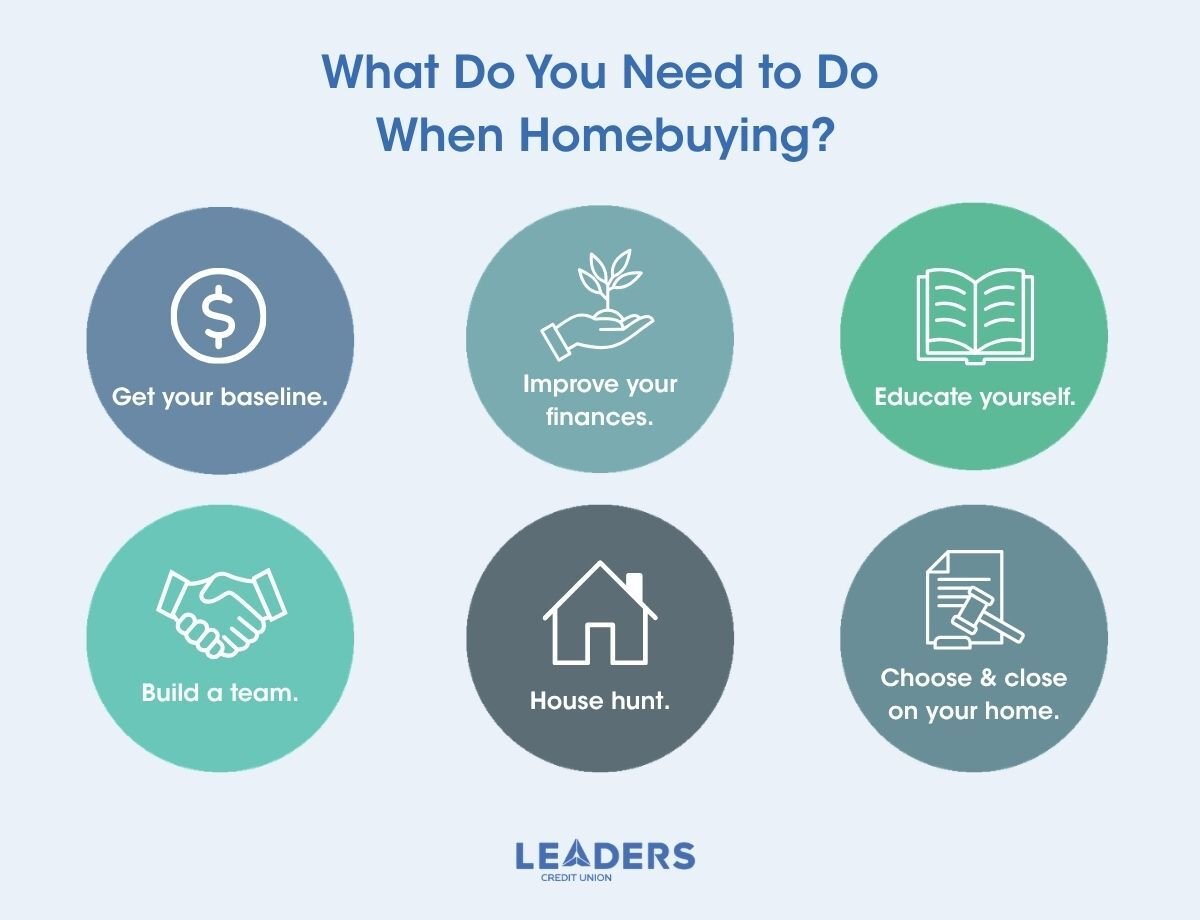
During the process of buying your first home, there are some key steps you need to take. We’ll break down each step and what year it needs to happen, so you can be ready to buy. Here are the basics:
- Get your baseline.
- Understand where you need to improve.
- Take action to improve.
- Educate yourself.
- Build a team.
- House hunt.
- Close.
Year 1: What Are the First Steps?
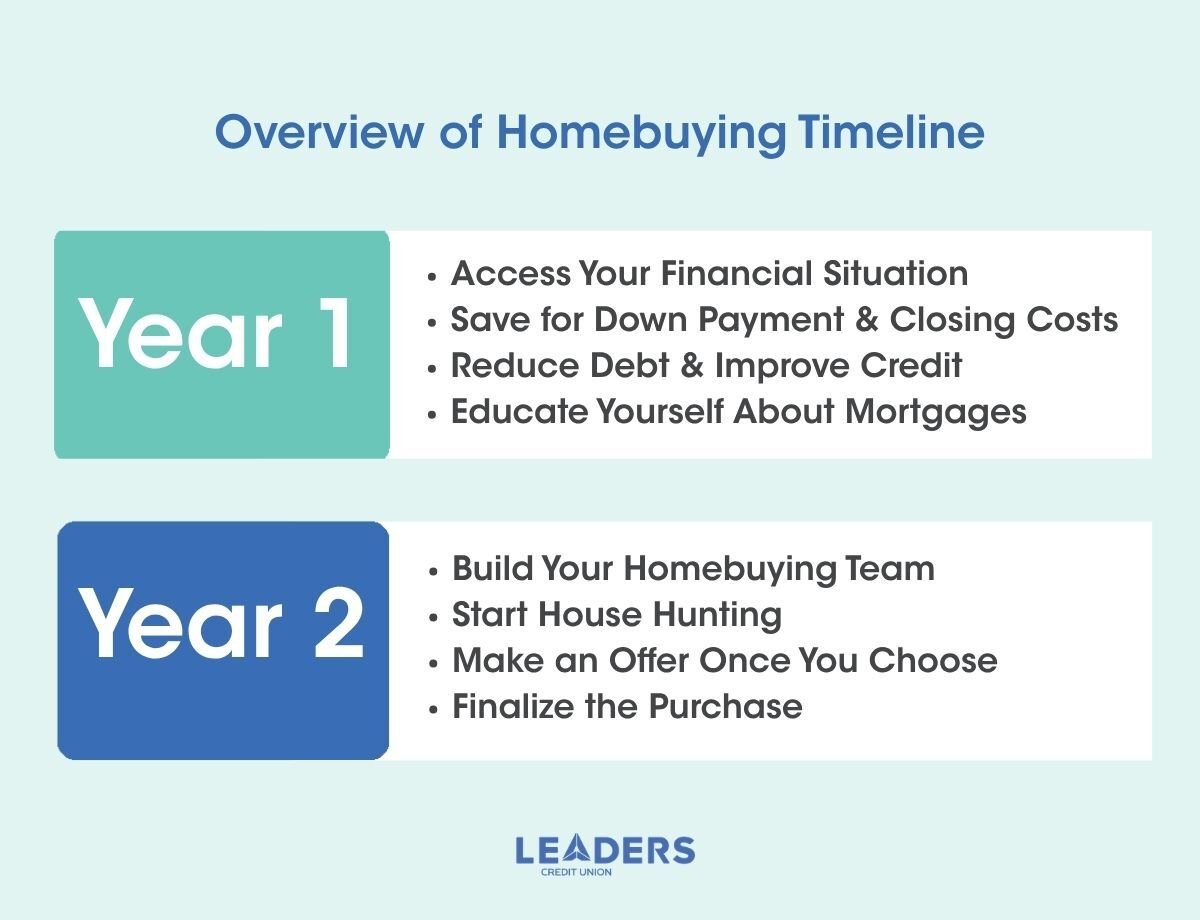
It’s time to begin your homebuying journey! Maybe you've already been looking on Zillow and Realtor.com. Have a goal in mind for what kind of house fits your needs and wants. Is it a $300k house? $400k? $250k? Pick one and use it as your starting point for pricing, style, location, and size. From there, it’s time to begin taking a look at your finances.
Months 1-3 Assess Your Financial Situation
-
Check Your Credit Report. Get a free credit report and check for errors.
-
Create a Budget. Track your income and expenses to assess your financial health and identify areas for savings.
-
Create a Document Hub. Whether it's a folder, a scan to a hard drive, or a drawer, keep your last two years' W2s, Tax Returns, and pay stubs in one place.
Months 4-6: Start Saving for a Down Payment & Closing Costs
-
Get your Baseline. Log your savings and checking account totals.
-
Open a Savings Account. Set up a dedicated savings account for your down payment.
-
Set Savings Goals. Set your goals to be at least 3.5% for the FHA minimum, 10% for a healthier down payment, and 3% for closing costs.

Months 7-9: Reduce Debt and Improve Credit
-
Get Your Baseline. Log all of your debt totals and the corresponding minimum monthly payments. Total those minimum payments.
-
Pay Down Debt. Focus on paying off high-interest debt, such as credit card balances, while keeping the balances low.
-
Student Loans. Consider an income-based repayment plan if payments are too high.
-
Avoid New Debt. Refrain from taking on new loans or credit cards.
Months 10-12: Research and Educate Yourself
-
Learn About Mortgages. Understand different types of mortgages and their terms.
-
Attend Homebuyer Workshops. Many local organizations offer free workshops to help first-time buyers navigate the home-buying process.
Year 2: Getting Ready to Buy
Now that you know more about your current financial situation, you can begin nailing down your options and work with a mortgage lender and realtor to buy your new home.
Months 13-15: Build Your Homebuying Team
-
Find a Real Estate Agent. Look for an experienced agent who understands your needs.
-
Consult a Mortgage Lender. Start the pre-approval process for a mortgage to know how much you can afford.
Months 16-18: Start House Hunting
-
Identify Your Needs and Wants. Make a list of must-haves and nice-to-haves in a home.
-
Visit Open Houses. Start visiting homes to get a feel for what's available in your price range.
Months 19-21: Make an Offer
-
Finalize Your Pre-Approval. Update your mortgage documents and get a final Pre-Approval Letter from your mortgage lender.
-
Choose a Home. Once you find the right home, work with your real estate agent to make a competitive offer.
-
Negotiate. Let your Real Estate agent guide you through the best ways to negotiate the price and terms with the seller.
Months 22-24: Finalize the Purchase
-
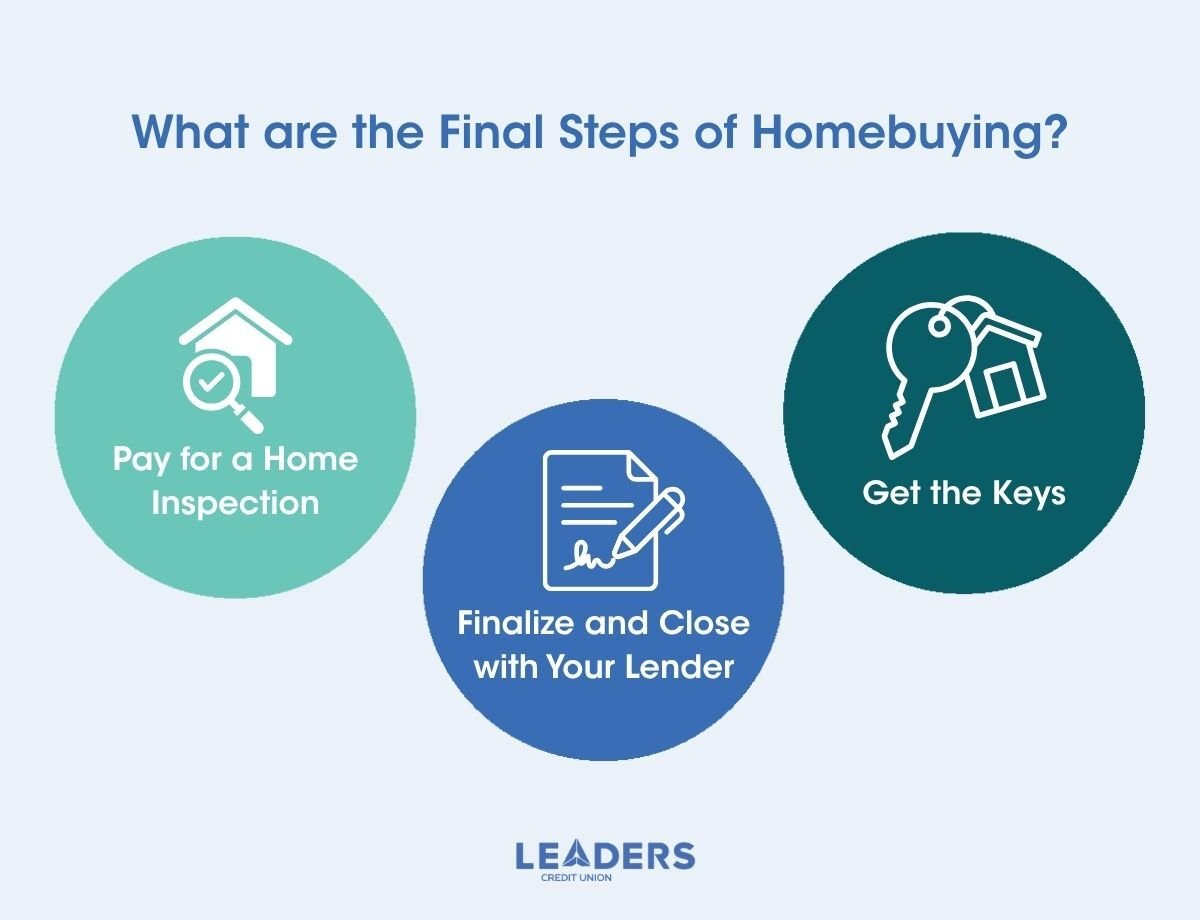
Home Inspection. Hire a professional to inspect the home for any issues.
-
Close the Deal. Work with your lender to finalize the mortgage and complete the closing process.
It’s Time to Close
Once you’ve completed all these steps, it’s time to close on your new house! You should be able to get the keys and start turning the new house you bought into your home.
FAQs about Buying Your First Home
Q: What is the first step in the homebuying journey?
A: The first step is to understand what you can afford by making sure your budget is up-to-date, checking on your credit score, and setting clear savings goals for what you need to spend on a down payment, closing fees, and FHA minimum.
Q: What should I do to prepare for the homebuying process?
A: Research houses you like, have a ballpark price in mind for what you can realistically spend on a monthly mortgage payment, and learn about different mortgage lenders and realtors in your community that you’d be comfortable working with while buying your home.
Q: How can I clearly communicate with a realtor about what I want in a new house?
A: Create a clear must-haves and nice-to-haves list to share with your realtor, so they can have a better understanding of what you’re looking for. Having open communication about what you have in mind could help your realtor find good options that align with your goals.
Q: Once we choose a house, is there anything else we need to do before we finalize our decision?
A: Make sure you have a home inspection done on the house before you agree to purchase. Home inspections could reveal issues or problems with the house you might not have been aware of during a walk-through tour.
Close on Your Home with Leaders Credit Union
Are you ready to begin the two-year journey to homeownership? Reach out to our Mortgage Champions, who can help you navigate the steps you need to take for your dream home to become a reality.
Be sure to check out our free Get Pre-Approved for Mortgage Guide, and read our other blog about homebuying, “Planning a Move? How to Buy a House Before Selling Yours.”
Leaders Credit Union is federally insured by the NCUA and an equal housing lender.


