







Published: August 4, 2026
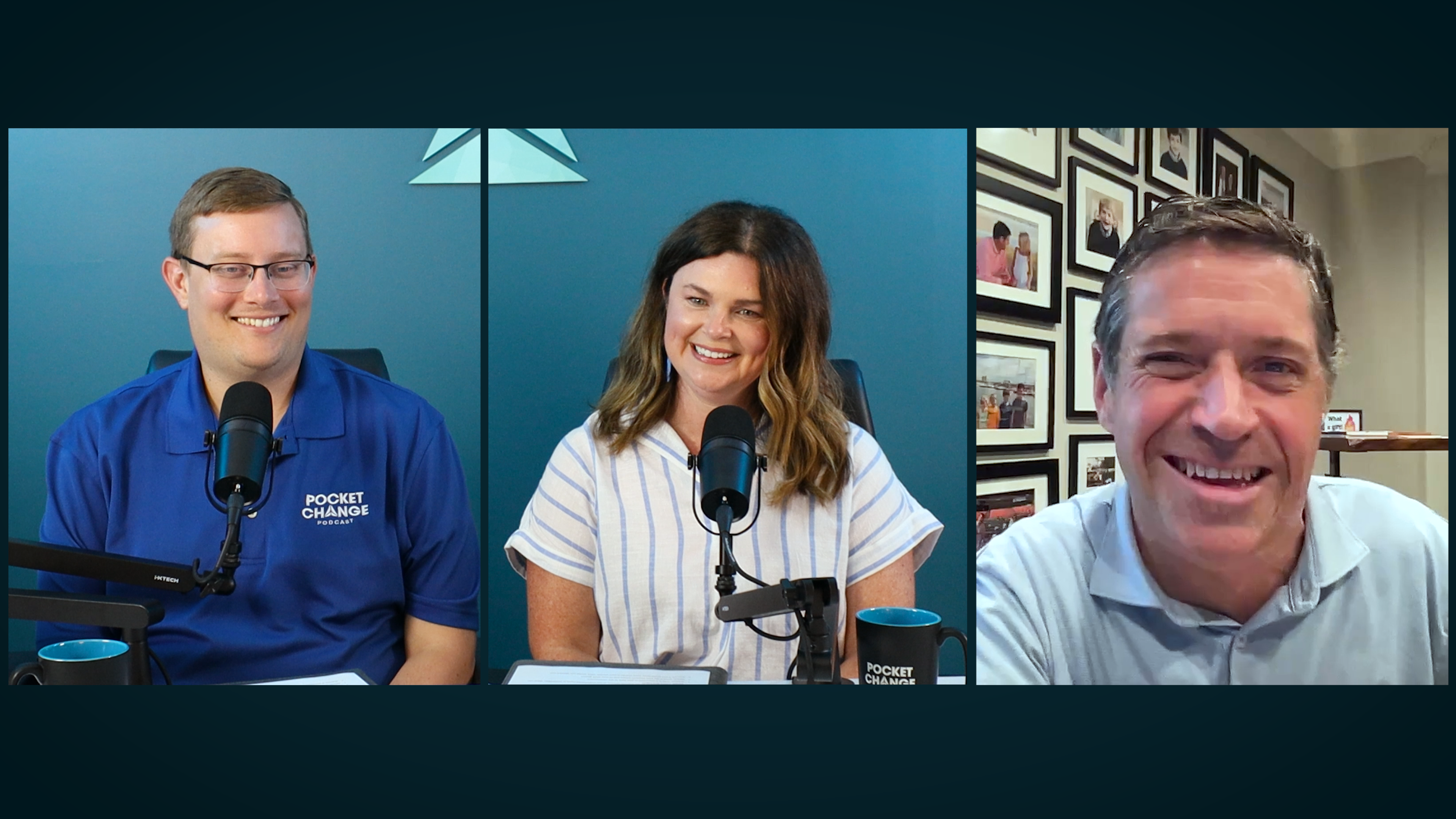
Episode 87: Pocket Change Podcast
Key Takeaways
- When John O’Leary was nine, he was in a fire accident that burned 100% of his body and was given a 1% chance of survival. Miraculously, he healed and is now married and has four children.
- Physical healing can be difficult and necessary, but emotional healing is vital and can take longer.
- Parents can be key players in helping their children handle limitations by walking with them through challenges.
- John will be speaking in Jackson, Tennessee, on September 17, at EmpowerEd: An Evening with John O’Leary presented by EPlus Broadband.
Summary
How did you get into public speaking?
John’s goal after being burned was never to speak about it again. Until one day, he decided to use his story for good and said yes to talking to a girl scout group.
"...the goal wasn't a business. It was to serve," said John.
What does saying yes to being used for good look like?
Whenever you have a calling to help someone else, act on it. Never ignore that feeling—recognize when it happens and act. It could look like all kinds of different things, but it’s important that you’re actually acting on them not ignoring them.
"...anything physical that I've been able to do in my life is the result of a mother, and then a father, and a community who loved me enough to suffer with me and to remind me that I could do difficult things," said John.
Over time, you’ll build the habit of looking for those opportunities. Think of the people who have done good in your life and made an impact on you. What actions did they take that inspired you or helped you in a hard season of life? Never assume someone else is going to help.
How did the movie Soul on Fire come about?
After speaking in Las Vegas, two women approached John about turning his book into a movie. After meeting with the director Sean McNamara, John took time to show him around St. Louis, where key events in his life happened.
This inspired the director to shoot Soul on Fire on location in Missouri, so many of the scenes you see in the movie are real locations where events in John's life took place, such as his college, church he got married in, and his parents' home.
What details do you need to know about EmpowerEd: An Evening with John O’Leary presented by EPlus Broadband?
John O’Leary will be the keynote speaker at the event, and it will take place on September 17, 2026. Dinner will be served at 6 p.m., and the program will begin at 7 p.m. Balcony seats and sponsorships are available at leadersgives.org/events.
Want to learn more about John’s story? Visit his website. Don’t miss out on the chance to see John right here in West Tennessee at Leaders Education Foundation’s annual fundraising event, EmpowerEd.
Interested in seeing John O’Leary at EmpowerEd? Visit leadersgives.org/events to get your tickets today!
Listen and Follow


Full Transcript
Shea:
Hey, this is Shea.
Carrie:
And this is Carrie.
Shea:
Welcome to the Pocket Change Podcast.
Carrie:
Where you'll learn better ways to spend, save and invest and take control of your financial journey.
Shea:
And live inspired.
Carrie:
Absolutely.
Shea:
Because our guest today is going to be the guest speaker at EmpowerEd, which is our Leaders Education Foundation's annual fundraiser, where we're going to honor teachers and have a really just inspiring evening. And so, can't wait.
Carrie:
I can't. And, you know, getting to speak with him about his amazing story and the movie that many of you have probably watched. It's just a pleasure to be able to have him as a guest today. We're excited to welcome our guest today, John O'Leary, best selling author, speaker, and inspiration for the movie Soul on Fire. Welcome to Pocket Change, John.
John O'Leary:
Hey Carrie. How are you?
Carrie:
I'm great. How are you?
John O'Leary:
Awesome.
Carrie:
Well, we're so excited to have you today with us. If you could just tell our listeners a little bit about yourself and your story and your background, how you got to this point in your life.
John O'Leary:
I mean, gosh, I am a son to two remarkable parents who I bet we talk a little bit about today. I'm married to my wife, Beth. We have four kids. I live a charmed life that doesn't make it easy or pain free or mistake free. But I really am blessed to have the life I have today. When you hear the backstory of where this thing all began.
John O'Leary:
So, I'm sure the question you're really saying is, man, we're like, what happened? Like what led you to become a speaker and a writer and all the other things you got going on? And what really happened was at age nine, I was in a fire, burned on my entire body. Should have died. I spent time in hospital. People showed up. God showed up, family showed up. And a little boy endured but never really prospered afterwards. I just struggled for a long time. And when my life changed, really was when I was later on in life, and I was in a church service, and the pastor challenged us to use our lives for something bigger, to stop making excuses, to say yes to being used for good. And that decision to stop hiding and start shining, start, maybe even better, start reflecting light has led me over 25 years or so to find the opportunity of speaking.
2800 times to have written a couple of books have been part of this film project. But more than that, to just find joy in the little things in life. And so that in a nutshell, that's my story.
Carrie:
Which is quite inspirational, I must add. I've seen the movie myself and I just think you're such an inspiration to so many of us, because we all have our own personal trials that we go through, and we shouldn't hide behind them.
John O’Leary:
That’s right
Shea:
Tell us about the healing that you went on. You know, in the years after the accident. And how long were you in the hospital after that?
John O'Leary:
Yeah. I mean, healing so layered like that word like, you know, we could talk about, “John, like, I bet it's hard to recover from burn care.” Like, for sure. So that part of the healing was five and a half months in hospital for the listeners and viewers who may not know, I was burned on 100% of my body and 87% of those burns were third degree. So, that's a massive physical trauma. So, that healing required five and a half months in hospital and then years of surgery and therapy afterwards, which led eventually to a pretty robust physical healing, like the ability to stand and to move and to run and to go back to grade school and learn how to write, play the piano like normal things. All kind of remarkable for a guy with no fingers and scars from his neck to his toes. But I would say, Shea, that the physical healing was the easiest of it all. I think the idea of like an emotional healing, the ability to look in the mirror and love what you see. Even children can struggle with self-worth and self-doubt and value. And so, as a little boy in a wheelchair, and as a young man, upright but with scars and limitations, man, I struggled and struggled for decades. So,that that healing took a little bit longer. I think it required some work, some self-work, some spiritual work, some dear friends who kept showing up and loving on me, and a family that when I was burned, refused to give up on me, but also a family that, even after I began making a physical recovery, refused to let me live less than the fullness of my life. So, all of that to say, although I'm in a great place today in my life, the healing continues. I don't think you ever get there. I think it's something we get to wrestle with each day.
Carrie:
That makes sense to me. So, how were you able to see yourself as not being defined and limited by your past, but stronger because of it?
John O'Leary:
You know, I think in some regards, that's what kept me from fully living my life, Carrie. This, this idea of not ever wanting to be defined by limitations. So, when I was, I got burned in fourth grade, learned how to walk essentially in fifth grade, then went back to school in sixth. And the very first activity I signed up for was soccer.
Like this dude with no fingers. And, you know, scars from my neck to my toes was out there, this little fella on the soccer line just running like a madman because I was trying to show classmates and fans like, “I'm normal.” When high school came around, I took unnecessary risks. I made every bad decision most people made in high school. I just made mine two or 3 or 50 different times. And that kind of snowballed into college and beyond, like just bad decision making, because I wanted everybody to know that I was normal. My first career, as you saw in the movie, I was in construction, you know, a man with no fingers swinging a hammer and like, what's that about? And it's proving to the world I'm enough. But so, the beauty of it all was I was doing things that really were kind of impressive. But the danger is when you're doing things to prove value to others when you don't believe it yourself. And that's really what I was, was modeling my life on,is how do I prove to everyone else that I'm enough? And so, I was fortunate to have parents who challenged me that I could do difficult things. You saw one of the scenes in the film where Little John learns how to eat again. And, you know, teaching a child how to how to wrestle with limitations and amputations and struggles. The way my mother wrestled with it is she put a fork in front of me the night I came home from the hospital and said, essentially, “Baby, when you're hungry, feed yourself.” And that was tough love. And if you're not careful, you think that's cruel and unusual punishment. But I'm telling you like as a guy who loves his parents. My mom, her heart broke that night, but it broke with me. She sat at the table with me, and the entire time it was a two-hour dinner. Not because she made steak, not because it was coming out of the kitchen slow, but because it took so long to figure out how to eat. But the cool thing about it is she was with me the entire time as a little boy eventually wedged a fork between his two broken hands and learned how to eat again. So long term, anything physical that I've been able to do in my life is the result of a mother, and then a father, and a community who loved me enough to suffer with me and to remind me that I could do difficult things.
Carrie:
Right. That was one of the more difficult scenes in the movie, for sure. I'm sure that it was hard for them to portray what you actually experienced, as well.
John O'Leary:
It's funny you bring that up. This is like inside baseball know, so, you know, buckle up people. But when you when you make a movie, they test scenes to see how they do. So, the whole movie, it's they want to make sure like it's a, it's a good movie. Right? So, they put it in front of audiences have never heard of John and they just watch it and then they give feedback afterwards. And the scene that tested most poorly was little John learning how to eat again. And it's in reality, like one of my favorite scenes in the movie and also in my life, because it shows me and my kids and now the world, what love looks like. And it's not easy. It's not snowplowing out all the struggles for your kids so their life can be easy. So often, if you do leadership right, if you do parenting right, it's letting your kids suffer, but doing so with them. It's letting your kids fail, but loving them as they come back to you and for giving them an offering grace. And so, the scene that many viewers struggled with the most, you mentioned you loved it, even if it brought a tear to your eye. And, man, I love it too, because I think it shows like leadership one on one. Put in front of people difficult things that you know, with enough time and effort and help, they can do. Prove to them they can move mountains.
Carrie:
That's right. Well, I believe I'm I have two boys, and so I've seen some hard times with my kids as well. And so, I think that scene for me was so impactful as a parent because it's their journey to live. It's not mine to interrupt what they're going through and to take over and make it easier for them, because in the long run, that's going to hurt them if they don't get that opportunity to see themselves succeed in something that's hard.
John O'Leary:
Well, you listen, so often in life, like growing up. Trust me, I dealt with this a lot. When a teacher would call home and say what little John did, my parents would stare at me like the wrath was coming. There was not a second side of that story. It was the teachers or bust. And now I think we've begun parenting in such a way where little Johnny is always right. And I think that might not serve our next generation in a meaningful, beneficial way long term. I think you got to find the bridge. You got to meet people where they are. But we again have to level up, not not meet them first where they are. You got to set a goal for what's possible. Have them start stepping forward and then meet them where they are as you as you do exactly that.
Shea:
Yeah, it is hard, because when you have young kids like you want to see them succeed. And but like we're talking about, taking that step back and letting them make the choice or make the mistake first. But like you said, suffering and walking alongside them in that is the way that, you know, our kids build capacity for their lives and going forward. So really, really good. Appreciate you sharing that. So, you know, you are a public speaker and you speak all over the country, many different areas. So how did you get into public speaking and share that story? And there is a scene in the movie about getting into that. So, share with share that with us.
John O'Leary:
You know the cool thing about this little, the movie is called Soul on Fire, and it's, wherever you stream stuff, you can stream this if you want. But most movies, you know, it says like based on a true story and none of it's real. Like if you really learn the story, you're like, oh, what are you? Rocky Balboa is not real? What are you talking about? It. So yeah, when you see, “Based on a true story” this time, it is real like that. In fact, the scene where they shoot little John on fire? That's my mom and dad's house. The scene where they show them learning how to eat. Carrie brought that up. That's John and John and his five siblings and his mom and dad's dining room table. Still there, man. Man. The scene where he meets Beth, that's where she and I met for the first time in college, where they eventually get married, not to give away the ending. That's in fact the church where she and I were married. So, not only did they use the real names of the people in the film and the real places where it happened, but the story itself is pretty accurate. And so one of the places that you called out, Shea, is “John, you became a speaker man. How did that happen?” And not through my own will. Like I, my goal after getting burned was to never talk, ever about being burned. It was to prove that it never happened to me. And that's why men soccer and partying and college and construction and all the things were to hide the story. And then, I was invited in the back row of a church service, just listening to, “Say yes to being used for good.” So, I heard those words. Everyone else around me heard those words. I don't know if anyone else took action on those words, but the following day in the movie, it shows like a mom pulling up to a construction site. In real, real life, it was a phone call from a third grade girl, and this little girl just said, “Mr. John, I heard about what happened to you. Will you share that story at my Girl Scout troop?” And I would have never, ever said yes because I'm an introvert and I don't like my hands, and I hate my backstory, and I don't like talking about being burned or the people who showed up. But the day before, I was challenged to say yes. So, 21 years later now, after that very first event, you know, the first group was in front of three Girl Scouts. That's where it started, just three little kids. But it went on from there and on from there and on from there. And it was never intended to be a business with books and movie. Like, man, that was never a goal. It was to serve one person. And then I found out three little Girl Scouts. And then afterwards, there was a dad who was in rotary, 24 little Rotarians. Just the goal wasn't a business. It was to serve. And in serving well over time, it became a robust business. But what drives us still is not top line revenue, its mission. We're like, we're called to to remind people the dignity and worth of their lives. Period. Full stop.
Carrie:
So, what does saying yes to being used for good look like? And how would you advise others to live that way? Because you do it so well.
John O'Leary:
You know, you're sweet to say that, that I do it so well. That's not always true. I make mistakes all the time. I take risks that prove how fallen I am all the time. I put my foot in my mouth all the time. I'm late for meetings all the time because I'm trying to be present where I am all the time. And so, to answer your question, showing saying yes to being used for good is as simple as it sounds. When you feel a tug on your heart that you can make a difference in any aspect of life, in your world or in the world of someone else, do it. And watch what happens. And sometimes that means something with one of your boys. Sometimes it means something with one of their teachers. Sometimes it means something with a lady who works in a cafeteria up at school, or a lady at McDonald's, or a guy cleaning your room in the hotel. But if, when you, when you feel that on your heart, who hasn't felt like, “Maybe I should say thank you, maybe I should tip more generously. Maybe I should see if that woman needs help crossing the street. Maybe I should help put her groceries in the car for her.” Who hasn't felt that? And then usually we put her head back down into our phone and we go about our lives. So, the first step of saying yes, to be in use for good is recognizing it's not that complicated of a step. Then as you elevate it, it could become a business, it could become a not for profit. It could be visits to a hospital to see kids who have been burned or dealing with cancer. It could be going up to prisons. It could be a million things that are bigger. But it, the big stuff begins with a little stuff lived out faithfully. And so, when you think about, man, what does that look like? One idea is, what if you had a routine daily where you just sought opportunities to be used for good? And finally, when you were able to check the box, “All right. Perfect. Now I can go to work and do my life.” But until you're able to check that box you were seeking around you and within you opportunities to make a difference. And when we have a heart bent toward that, at first it seems a little bit like work, but eventually just becomes part of our DNA.
Carrie:
You know, you mentioning that makes me think of the announcer for the Saint Louis Cardinals. He also did that. He felt that tug in his heart to reach out to you and to go visit you. So, we learned this not just from you, but also the people that are in your life that made a difference during that journey.
John O'Leary:
Why I can share my story is because it has so little to do with the guy sharing it. So, I have been blessed to be served so well by so many people throughout my entire life. And the guy you're talking about is a fellow named Jack Buck. I would imagine as many of your listeners and viewers recognize the name Jack Buck or Joe Buck, the newer football announcer and television announcer. But I grew up in the 80s, a baseball fan and a Cardinal fan. And my guy, his name was Jack Buck. He was the voice of my summertime. I don't know how old your boys are, Carrie, but I was nine when I was burned, and my favorite sport was baseball. And man, I dreamed of being a baseball player. And then I got burned on a Saturday night. And on that, I'm sorry, Saturday morning. And on Saturday night, and you see it in the film. They did such a beautiful job in that scene where they show pretty black shoes walking into a room, and then it rises as the shoes sit down and then it goes up and you eventually see the face of Jack Buck. It's played by William H. Macy in the movie, but in real life, it wasn't some actor. It wasn't some like, “take five” where they got it just right. It was a humble guy, successful broadcaster who had heard about a little boy who got burned and decided that he could be used for good. So back to that idea of just watch what happens when you say yes. So, he left the party that night that he had been attending. He visited me, he encouraged me, and he told me to keep fighting, that there would be a John O'Leary Day at the ballpark. And man, you know, that night I was in darkness because of swelling to my eyes, like I could not see anything, but I could hear the voice of Jack Buck. Recognized it immediately, and he gave me something worthy of fighting for right away. It's, you know, it's a layered story. There's so much more to what Jack did. But it began, listeners, with one guy saying yes to being used for good.
Shea:
And I think with the saying yes, what you've also mentioned is how quickly people took action. You know, like in your case, you heard the message about saying yes for good. The next day, you said yes to speaking to the Girl Scouts. And then Jack Buck heard your story, said yes to going up to the hospital and visiting and encouraging you. So that encourages me to, you know, also when I see something or can do something for someone to just do it. I think oftentimes we might, you know, we might say someone else will do it or, you know, that's not for me. But saying yes also means, “Hey, let's do it now. Let's take action,” I think.
John O'Leary:
Well, number one, tomorrow's not promised. So just from a broad human perspective, this idea of tomorrow, who says you'll get it? So that's one thing just to keep your back pocket. Secondly, when I say to myself, and you all might be totally different than I am, but when I say to myself, I'll get back to you, I'm not diligent enough or intentional enough to typically do it. So, when I, when I feel the call and my heart to do something, if I don't do it now, or at least put it in my calendar to do later, it's just my intentions. I don't. I'm not, I fail. And I think I'm not alone in that. So, when you feel a call to do something, just do it. What Jack did that night as he left, it was a charity party. It was. It's called the Missouri Sportswriters Association. They got together from around the state of Missouri to celebrate the best of sports that that winter and the year before. And he left that with a tuxedo on to visit a dying child. So, if he can do something that dramatic and in doing so, shape a child's life afterwards, we can hold that door open. We can make that phone call, we can bring dinner to our neighbor who's been widowed recently. We can do little things with love, and in doing so shape the world for good. And I know this all sounds so Pollyannish, but when you listen, we've experienced it, my family and I. And I'm not the only one who got burned. My family lost their home. But there was a family in our community who stepped up and said, “We're moving out.” I never told this story, but they moved into essentially like a Holiday Inn. They had five kids of their own, into a little Holiday Inn, so that my mom and dad and five siblings could be together in a home.
Carrie:
Oh, wow.
John O'Leary:
There was a lady who heard about, like, the O'Leary's lost all their clothes. And so, she just started this organization to bring clothes and medicine and all the things you lose in a fire to my mom and dad.
Carrie:
Wow.
John O'Leary:
On and on and on. The army of love shows up for us in our lives. Just people who felt, “I guess I could do something here.” We had meals being brought to our family first at that little house that they stayed at. Eventually they rebuilt our family home. I came home five months later. We had meals dropped off every night for two years. Just people showing up, recognizing, “Gosh, what's it like to deal with this poor little kid of theirs? And the struggles and the memories and the scars and the nightmares of the five other kids? How can we support this family? Meals. What if we take just one meal off her plate? Maybe that would help.” I went to therapy for two years. My mother and father never drove me to physical or occupational therapy. There was a train of volunteers long before Uber showed up that just picked up this little kid in a wheelchair and took them off to the hospital and picked them up and dropped them off afterwards.
Carrie:
Wow.
John O'Leary:
So none of these things are big, but all of them helped drive our lives forward and ultimately fill our lives so that they can become the life eventually of abundance that they are today.
Carrie:
Yeah. Wow.
Shea:
So, your story is a story of resilience. What does that word mean to you?
John O'Leary:
So I hate the word “I”, so I don't love, “I hope you're all sitting down. I just am so tough.” You know, like I struggle with that. So instead, I try to answer in ways that I show the resilience of others. In physical therapy, they stretch joints. Okay. So, when you're burned, your body, as it heals, grows in toward the core. It wants to go back into the fetal position as it as it heals. So, to fight against that, therapists would come into our lives and they would stretch our joints. Which means they are inflicting unbearable pain on patients who are already dealing with unbearable pain. And what I remember talking about resilience is looking down through my tears, watching these other people stretching my joints, watching them cry, thinking, “What are they crying about?” You know, “I'm the kid in the hospital being stretched here. I'm the one crying. What are they crying about?” That's me. Because my life for a long time was all about me. But I see and I think the word resilience that in spite of the tears they were inflicting in my life and into their own, these therapists would do their job, go home to their family that day, come back and do it again, the following. And the following and the following. And to me, man, that is emblematic of resilience, this ability to stretch, either someone else or yourself in such a way that it causes pain, it might hurt, but you know your why. You're driven by a purpose greater than yourself. And so, you, you wipe the tears, you wipe the sweat, you go home and you come back and you do it again. Like that's resilience, doing things that you do not want to do that the world says, “Maybe you don't have to do that.” But if you dedicate yourself to doing it, it will change not only your life, but others.
Shea:
I love that, yeah.
Carrie:
Yeah, I do too.
Shea:
So, we've talked a little bit about the movie, Soul on Fire. We've mentioned several scenes, but tell us a little bit about it and how that how that all came about.
John O'Leary:
So again, man, like you're talking to a Missouri boy who has a tough time getting a mic on in front of three Girl Scouts, let alone big audiences or whatever else we've done since. An idea of a movie was never mine. So how did that happen? And here's in a nutshell. I was speaking in Las Vegas doing a book signing afterwards, and two women came up, one was named Linda, one was named Margaret. And they said, “Have you ever thought of turning your book into a movie?” And I said, “No, no, I haven't.” You know. And then one of them said, “Could we try?” So if you guys remember, I was taught in church 20 years ago. Like the answer is yes, even if you feel like unworthy, which just watch what happens. And so I said, “Y'all can try. You go for it.” So, they tried. Eventually they raised a little bit of funding. They hired a like a writer. Eventually the script was complete that attracted a director named Sean McNamara, who's directed 56 folding films, including like Reagan and Miracle Season and Miracle and Soul Surfer and now Soul on Fire. And I mean, he's a gifted director, great guy. He came in to Saint Louis and he was like fundraising, essentially, asking people for help funding this project. Movies aren't shot free and they're not shot inexpensively. So, he was meeting with some corporate leaders in our community. And then I just, like, took him around the community to show him, like what I love about my hometown. So I take him to SLU, where I went to college, Saint Louis U. And he's like, “Man, this place is beautiful. Look at this place.” He's like, “It's unbelievable!” Then I took him out to the hospital, Mercy, where I was treated. I took him to the cemetery where Jack Buck is buried. It's a federal cemetery which perfectly marble crosses everywhere. Beautiful. I took him to the church where I was married, and then I took him out to dinner that night at my mom and dad's house. And mom made dinner, and dad's in his little wheelchair. And at the end of the dinner, he says, “Gosh, man, what a day. Can you tell me, like, where the fire happened?” So, he gets up, my mom gets up to show him, and Sean's like, “Are you telling me we're eating dinner in the house that burned down?” And we're like, “Yeah, of course. Like, this is our family home.” And he’s just like, like I'm right now. He gets emotional. He's like, “Dude, we can't shoot this film in Hollywood. We got to, we got to shoot it where it happened.” So, he had the idea of shooting the film and Saint Louis they funded, they shot on location, they brought in the actors and the team. A couple hundred folks are part of every scene as they shoot. It's craziness, man. It's like a circus. It was eventually picked up by Sony and enrolled in the theaters around the country and around the world. The cool thing about the movie, the number one film in 2025, released theatrically, like the kind you pay $18 to go sit at, wasn't Guardians of the Galaxy or Superman 50. It was a little movie shot in the Midwest about a little boy got burned, and then the community that showed up. And I think what that's a reminder of is not that people want to watch stories of kids getting burned, it's they want to watch stories of love showing up, of heroes showing up, and that's what they saw in Soul on Fire. It's been one of the top streaming shows this year on all streaming platforms. And again, it's not because people like seeing a kid get burned or go through struggles learning how to walk again or feed himself. It's because we live in a society that believes our best days are behind us, and the world is broken beyond repair, and it's never been so divided and so ugly. And then you watch this little true story about a little kid, and then the community, and then the grace, and then the mercy, and then he ends up even with the girl at the end. And it's just, it's a beautiful story. It's a beautiful, true story. And I think it gives folks, whether they're great grandmothers, or they’re six year old kids, hope also for their lives not to be the main character. I don't think, at the end of the day, I think Facebook has lied to us. I don't think we really want that for our lives. I think Real Housewives of Whatever have taught us what that looks like. When you think you're the main character, I think what we really want to do is we want to be the main character in someone else's story. We want, we want to serve our parents as they move toward the finish line. We want to raise up the next generation of great kids. We want to pour into our community. We want to become a hero for somebody else. That's the kind of life we desire. And Soul on Fire shows what it looks like lived out.
Shea:
And you can find it on streaming platforms now. If you haven't seen it, go check it out because it is an amazing movie.
Carrie:
It is. It's phenomenal. My youngest son, he's 12, he and I watched it together and he still is talking about it. He wants to meet you and he's just been so inspired by your story. But so, in a way, you're kind of a hero to him. So, what does being a hero mean to you?
John O'Leary:
Well, I'll answer it, I promise. But first, look at heroes in your life. And did any of them wear capes for the most part? Were any of them perfectly beautiful or articulate or straight A's? And the reality is, the heroes in our lives usually went by the name Grandma or Mom, or a classmate who helped you get out of the wheelchair and into a desk. Or it's just like ordinary folks. Like there's nothing that all that unique about any of them except they did something kind for you. They believed in you before you believed in yourself. So, I've been inundated in my life with heroes, and I'm grateful for every single one of them. And, you know, we're recording this not long after the 4th of July here in the US, and I was at a parade with my kids and my wife. And, you know, you can tell when people are staring at you. And I could tell this little kid was just staring at me. And sometimes that means they're looking at my hands. But I could tell it was like not a stare of like, “What's wrong with him?” But a stare of like, “Oh my gosh, I think that's him.” So, I'm like, I'm like, “Hey little man, have I met you?” And he goes, “Are you Mr. John?” I'm like, “I am John.” He goes, “I saw your movie.” So he goes, “Can I get a picture with you?” So, like, we take a little picture and then his three little buddies come up and do like pretty soon it's like the Pied Piper grandmas and grandparents and like, younger, like, none of them are paying any attention to me. But all these young kids are coming up to get a photo and just a hug and a handshake. And I think being a hero looks like becoming the most authentic version of yourself. Not putting on false airs, not brushing your hair differently, not trying to speak differently. Not trying to work out different. Like it just looks like being you perfectly. And if we can do that, it will become so attractive enough, regardless of our scars, that kids will look up and say, “Are you Miss? Are you Mr.? Can I just get a picture with you? Can I just say hi?” And I think, you don't need to be burned to do that, and you don't have to have a film made about your life to do that. I think the world is aching for those kinds of heroes, and any one of us can become it.
Carrie:
That's great.
Shea:
A lot of heroes are oftentimes teachers and those we encounter in the classroom, I think. And you're going to be the keynote speaker at our event, EmpowerEd in September. We'll be honoring teachers through our Leaders Education Foundation. And so, what can our, any guests and people who attend? What can they expect that night?
John O'Leary:
First of all, a good time. I've heard that even if they turn off the AV and the mics get shot and the guys end up with laryngitis, that the people themselves who fill the rooms will make it valuable enough to invest your time. Like come for the people, come for community, come for encouragement, for one another. So, like what a great, what a great minimum expectation. That you are going to feel loved and you're going to be a part of this room with a lot of love. That's awesome. So, expect that. Then from the O'Leary keynote. Man, I think you should expect to laugh and cry. You should expect to feel deeply. You should expect a guy who's going to spend some time reminding you that your story is better than you thought, that it's worth living more clearly and loudly and vibrantly than maybe you have been or had been. I'm going to talk a little bit about heroes and remind us how we can become more of one in our own lives, not only for those we serve, because my gosh, we do a lot of that already, but also for the person staring back at us in the mirror. I'll try to provide some clear tools without boring you to sleep on what that might look like each day to fill your bucket up before you empty it out to everybody else. And I expect as you wipe your tears and laugh a little, you will be sure, contrary to our dear friends in the media, that better days are in front of us. So, I think it's going to be an awesome celebration personally, selfishly, I'm excited to be a fly on the wall that night. I know I have a job to do, but I'm excited just to be with great folks.
Shea:
Well, we're glad to have you, and it sounds like we will leave EmpowerEd, which is the goal of the of the event and why we call it that. Because it will be an empowering and inspiring evening, but we're excited for that. It's coming up on September 17th. It's here in Jackson, Tennessee, at the Carl Perkins Civic Center. And for our listeners and viewers, balcony tickets are available online at leadersgives.org/events, as well as any other supporters or organizations or groups that want to come, we'd be happy to have them and can't wait to celebrate six educators that night, September 17th at the Carl Perkins Civic Center for EmpowerEd.
Carrie:
Cannot wait. You'll see me behind the camera there, by the way, I'm a photographer on the side, so I'll get to see a lot of you that night.
John O'Leary:
I'll try to flex, Carrie. I'll try to be walking around making as big muscles as I possibly can. We'll see how that goes. But regarding the educators, I married one. So, the girl that you met in the movie, if you haven't seen it, this beautiful girl, like she teaches kids with special needs. That's my wife. That's her heart for our community. I was raised by an educator. My mother taught third grade history. I learned how to play the piano through an educator. We'll probably share that story that evening, and it will be a reminder for all of us that in your own ways, even if you're not a professional educator, you are one. There are people who are looking up to you, and it's going to be a reminder that you get to dictate to them what their future looks like by the way you show up each day in your present like it's a really big deal. So, if you haven't yet got your tickets, get them now and bring a friend. In a world that cries how bad everything is, you will be reminded that it's better than they say.
Carrie:
Can't wait. So why is it important to give back to the community?
John O'Leary:
Man, we live in the West, you and I, and whether it's Jackson or Saint Louis, and we think through the Western world that we did this. Look, look, look what I did. In fact, follow me online and see how great I am. And what is true in our stories collectively is you've done very little by yourself. That's not a shot across the bow. It's not to make you feel offended, I hope, but instead it's to remind you that we sit on the shoulders of giants. The giants are called grandparents and parents and teachers and pastors and rabbis and priests and guys you meet at AA and people who hold doors open for you and great educators and coaches, like there are everybody else, who reminded you of little things like tuck in your shirt. Be here on time. Get up and go to work. Do the right thing. Don't dangle prepositions. Right? Like little things. They were the ones. And now you and I do what we do in our lives because of them. So, if that is true and it is true, you may have done some really cool things in your life and I'm glad for you. But you didn't do it just because you did it. We lean into those around us and we sit on their shoulders. If that's true, then we must recognize we are called to reach our hand back. There's a great poem and I'll butcher it, so I won't try to read it all to you, but it's about the bridge builder, and it's about this old man near the end of his life who's building a bridge. And there's a young boy on the other side, and he keeps yelling across the rapids, “Why are you building this bridge? You've already crossed the difficult waters.” And he said, “You're right. I have indeed crossed the difficult waters, and I had the strength to do so, but not everybody else will be able to. So I don't build this bridge for me. I build them for those who are coming behind me.” So, we're called in the community to reach our hand back, or to build that bridge back, to lift up the next generation so they can do better. The life, maybe in this generation, we're starting to think it's about us, but every previous generation recognize it's not. It's about those we can build up right behind us. And the call of that then, is to become the best version of yourself. Yes. That's awesome. In order to elevate those who are coming along right behind us.
Shea:
I think that kind of ties into a little bit with the next question. You know, we are a financial institution, we’re a credit union and credit unions’ kind of mantra worldwide and nationwide is to be “People helping people.” We're trying to lend a hand to others and help support our neighbors and friends with financial services. You know, that looks different for every occupation, but serving the community and helping others in that way. And so with that in mind and what you just said, what are some of the best financial advice you've ever been given?
John O'Leary:
Run from debt, the bad kind of debt. Start saving now. Tithe. Be intentional. Those who are thoughtful with little will have far more to manage longer term. Einstein, one of the things, that, one of my favorite quotes is he says “Compound interest is the eighth wonder of the world. Those who understand it, get it. Those who don't, pay it.”
Shea:
Yeah.
John O'Leary:
The beauty of compound interest, man. And that is true. Like the reason I love credit unions and I love advisors and I love money is because it is the canary in the mine. What you focus on grows. And those who can be thoughtful with money can also be thoughtful and relationships, they can be thoughtful spiritually. They can be thoughtful with generosity. They can be thoughtful in everything in life. And so, I love folks who, you know, my grandfather and grandmother were very intentional, and they taught their grandbabies how to be very intentional. My parents were a little bit less intentional. They taught us generosity, which is awesome. But they were very intentional with generosity, less intentional with their own financial picture. And if you can blend both of those perspectives into one, you can have a beautiful financial life. And in having one, you can make sure other people have a beautiful financial life as well. I have a friend who will rename nameless, who goes, “Live like no one else, so you can live like no one else.”
Shea:
That’s right.
John O’Leary:
And that's a great line, man. Live like no, because no one else is. We all got everything that we don't really need to impress friends that we don't really have, who aren't even looking up to us in the first place. So rather than trying to impress them, stop and be thoughtful with the little that you have. And in doing so, you'll have a little more and a little more. And you watch this over time. Teach your kids well. Help them raise up the next generation. We can turn this boat around.
Shea:
That'll compound.
Carrie:
Yes. Okay, so we are the Pocket Change Podcast. So, one question we always love to ask is if you were to find some extra change in your pocket, what would you spend it on?
John O'Leary:
Man, I'm going up for ice cream. I mean, I have a sugar tooth, primarily because I have unfortunately raised four kids with that. And I'm a, I'm the kind of dad who becomes whatever my kids like. So, if they're into some random sport, that's my deal. And if they're into bubble gum ice cream, that's my deal. And so, my kids right now are into ice cream, and they're into their dad, and they're end up going out for ice cream in the summertime with the windows down. And if I found a little loose change, I would show them what I found. I'd hope to find enough because ice cream is not as cheap as it used to be.
Carrie:
That's true.
John O’Leary:
But if we find it, you know, maybe 24 quarters, that's enough for us to get a little ice cream and create a memory with my kids. I'm into buying memories. And I don't apologize for over investing in those memories. I want memories with my babies and my family and my friends.
Carrie:
That's wonderful. What flavor are you choosing?
John O'Leary:
It depends on where we go. But lately we go. There's a place in Saint Louis for those who want to travel up here and watch a Cardinals game and then do something special afterwards, after you go to the arch, you go out to a little place called Ted Drewes. You can thank me later. So, Ted Drewes is a little ice cream place that's been around about 100 years. It's the kind of place that, long lines, somehow you don't know how they do it. They make the ice cream so quickly that before you know what you want, you're up to order. And before you even fully pay, they're like showing you what it looks like upside down. Then they hand you the thing and you go off and you sit on the hood of your car, and you look up at the stars and you're part of community, and you eat custard or ice cream with others and with family. And like, I think that's something we, the beauty of Uber Eats is you don't have to see anybody. In fact, you can even check a box that says, leave it at the front door and.
Shea:
Don't knock!
John O'Leary:
“I don't want to know my neighbors. I don't want to know my family. I don't want to see cousins and aunts.” Like, or you can get in your car and say, “We got room for one more, if we double buckle in the back. Hopefully mom doesn't find out.” And you can sit on the hood and scratch up the hood and say, you know, who cares? It's a hood. And create a memory. And so, my ice cream there is probably Butterfinger, if I'm really being edgy, Butterfinger with banana.
Carrie:
Okay, yeah, I’ll definitely have to try that out.
Shea:
That's actually what we're serving at EmpowerEd: Butterfinger ice cream with banana. So come on, you'll love it.
John O'Leary:
Get in line behind me. Follow O'Leary. He won't be at the book table. He'll be at the.
Shea:
In the ice cream line.
Carrie:
Well, it was such a pleasure having you with us today, John. And we look forward to September to get to hear you at EmpowerEd, and meet you in person. And we just, thank you for being our guest today.
John O'Leary:
I appreciate you Carrie, and, Shea, I appreciate you, man. Thank you for the work you do.
Listen and Follow


