







Published: September 3, 2026
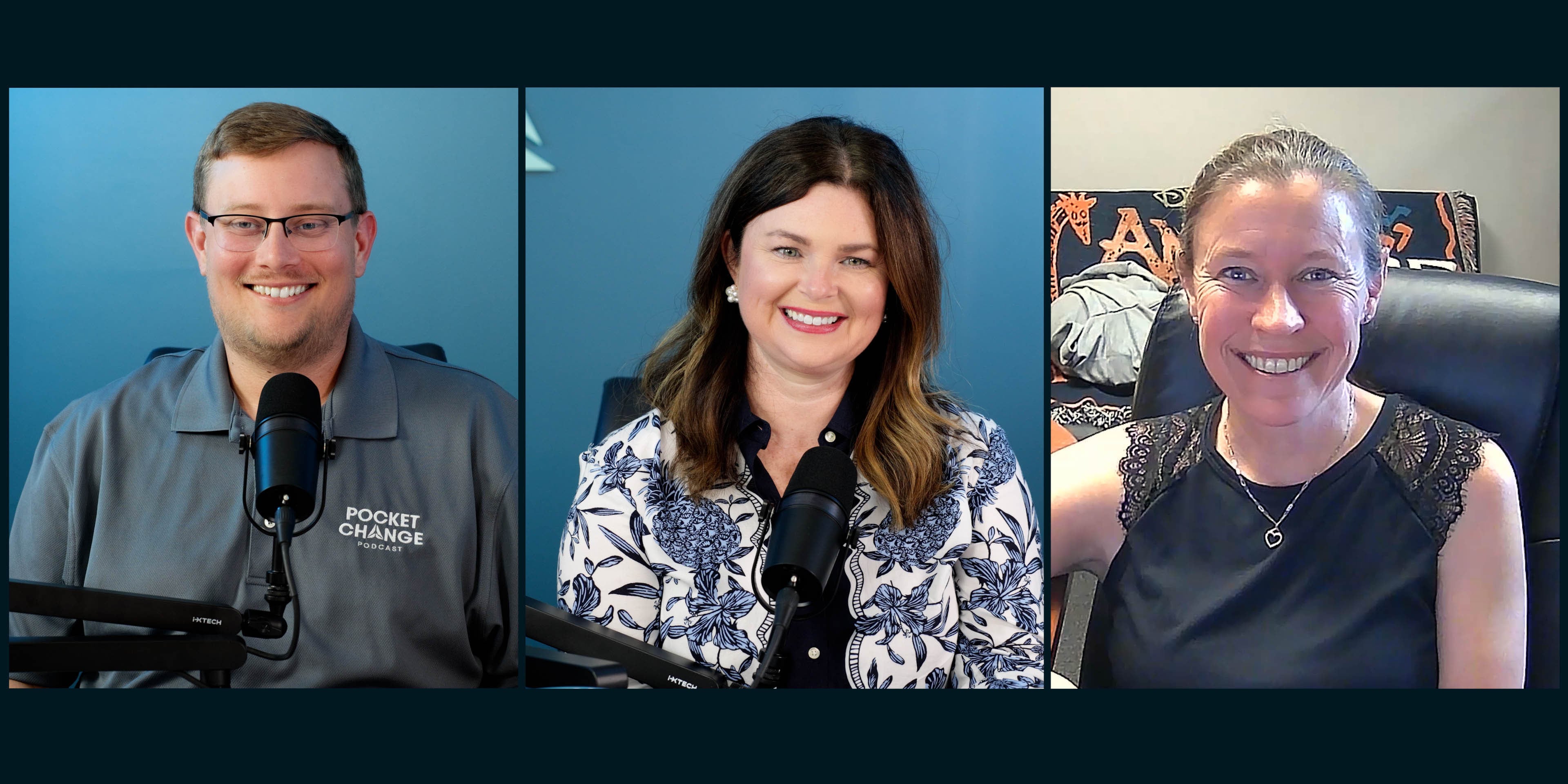
Episode 89: Pocket Change Podcast
Key Takeaways
- Captive animals in zoos serve as ambassadors for animals in the wild by allowing visitors a personal connection they couldn’t get from watching television or social media.
- The Memphis Zoo is one of a few zoos that have completed a 25-year strategic plan.
- Louisiana pine snakes and gopher tortoise frogs are two local species the Memphis Zoo’s conservation team is trying to protect.
- Leaders Day at the Zoo is scheduled for Saturday, September 12, and Leaders members can enter the zoo for free by picking up ticket vouchers at one of our branches.
Summary
What does a day in the life at the zoo look like?
Every day is different. Their day-to-day challenge is the stingray exhibit, which is coming in spring 2027. They are also working on building a new exhibit for African hoofstock: elephants, giraffes, and rhinos.
Where did you get your love for animals?
Courtney has always loved animals; she enjoyed pets and riding horses growing up and stuck with her passion for animals into adulthood. Searching for internships could help make a difference by trying different career paths to see what’s available. There’s more to animals than just veterinary schools.
Why should zoos exist?
Seeing animals in person creates a connection and passion that a TV show can't portray. The animals serve as ambassadors for the ones in the wild.
Do you have any wild stories from working with animals?
Courtney flew four puma cubs from the Pacific Northwest, two red pandas from Canada, giant pandas back to China, and a polar bear. When she flew with the polar bear, he was trying to “ice break” on the plane, which is when polar bears rear on their hind legs and try to break ice.
What does it mean to you that the Memphis Zoo is ranked 2nd Best in the Nation?
Memphis Zoo is one of the few zoos that completed a 25-year strategic plan. It is a fun zoo to walk around; it has a variety of collections to see, and it tries to meet the public where they are at different stages of life. If you want to hear more stories about the Memphis Zoo, follow them on social media @MemphisZoo.
What conservation projects mean a lot to the Memphis Zoo?
Conservation efforts the Memphis Zoo is focusing on for animals native to the region include the Louisiana pine snake and the gopher tortoise frog, both endangered species.
What can people expect at Leaders Day at the Zoo?
Come early in the day to see animals be more active in their exhibits. The hotter it gets, the more likely they’ll want to rest. Use the Memphis Zoo app to check out keeper chats and learn.
What’s the best financial advice you’ve ever been given?
Zookeeping is a career of passion and doesn't always pay well. Get a handle on what your habits are and influence them over time. Pay attention to your spending and saving trends.
To learn more about the Memphis Zoo, visit memphiszoo.org or follow them on social media at @MemphisZoo.
Interested in Leaders Day at the Zoo? Stop by one of our branches to pick up a ticket voucher. One voucher is good for 4 tickets into the zoo. $10 parking is not included.
The Pocket Change Podcast is presented by Leaders Credit Union. To learn more about Leaders, visit leaderscu.com.
Listen and Follow


Full Transcript
Shea:
Hey, this is Shea.
Carrie:
And this is Carrie.
Shea:
Welcome to the Pocket Change Podcast.
Carrie:
Where you'll learn better ways to spend, save and invest and take control of your financial journey.
Shea:
All right, Carrie, we're going to start with a few jokes for this episode.
Carrie:
Okay.
Shea:
All right. What kind of animal should never play cards?
Carrie:
A porcupine?
Shea:
A cheetah.
Carrie:
A cheetah.
Shea:
Get it? All right. What do you call a lazy kangaroo?
Carrie:
I have no idea.
Shea:
A pouch potato.
Carrie:
A pouch potato. I like it.
Shea:
So, we're learning about animals in this episode. Conservation. And a hidden gem right in our backyard.
Carrie:
That's right. And also a big day coming up too.
Shea:
So can't wait to learn all about animals and how we can enjoy seeing them, learning more about them, and being educated about them.
Carrie:
We're excited to welcome our guests, Courtney Janney, Chief Zoological Officer at the Memphis Zoo. Welcome to Pocket Change, Courtney.
Courtney Janney:
Hi. Thanks for having me.
Carrie:
Yes. So, can you tell us a little bit about your background and how you came to be at the Memphis Zoo and your current position?
Courtney Janney:
Yeah, I was somebody who grew up always wanting to work with animals. But when you're younger, and it's something I tell kids nowadays all the time, the only professionals you typically saw working with animals were veterinarians. So, to me, that meant I wanted to grow up and be a veterinarian. It wasn't really until I got into my undergraduate, well into my undergraduate career, that I realized there were so many different fields you could go into. I'd actually spent a summer doing wildlife rehab, and I fell into a zoo internship at a tiny zoo in Texas and fell in love with working with captive wildlife. I like training animals. I like building a relationship with animals. I had done, through high school and especially undergraduate, I had worked at vet hospitals and I liked the animal side of the work. I struggled - and I didn't mind the medical side - I just really liked getting close in building a rapport with animals, as opposed to having a rotating door of different people's pets coming in all the time. And so, I got this internship in Texas. From there, I actually got an internship at Walt Disney World, which is like the best. I mean, you can't think of anything better, when you're a kid, especially. So, I got an internship there in their animal behavior department, and at the time, accredited zoos were required to develop a research component of animal care or conservation. And so, there were a lot of zoos trying to figure out what that meant. So, to do that at Disney was an incredible experience because they don't do anything halfway. And so, I got an incredible exposure to a lot of people who truly moved on to become leaders in the field. But what I learned was I was not interested in research. It was what a lot of my degree was, in biochemistry, but I loved being outside and working directly with the animals. I always joked that I didn't want to wear clothes that required dry cleaning. I didn't want to have a gym membership, so I truly, I worked outside - and thank goodness I was in my 20s - but I worked outside 11 hours a day in Florida, Central Florida all year round, which is a lot. And so, I went from there. I landed my first real job, my grown-up job as a zookeeper at Disney. I was very lucky to get hired out of my internship. I was there for five years before I decided that being closer to family was important. I'd gotten married and we were interested in buying a house and starting a family. So, we moved up to the Washington, D.C. area where I worked at Smithsonian's National Zoo. So, I worked at Disney with African hoofstock and birds. So, think giraffe, zebra, everything from Africa that has hooves. And then big birds. And then at National, I worked in their Asia Trail department, which ended up being sloth bears, clouded leopards, fishing cats, also giant pandas. And so, the opportunity to move to Memphis was after I'd been at National for five years. Somebody reached out to different folks in the panda world. I like to joke that I was the only person dumb enough to actually move from one panda organization to another one. Most people work with pandas, and then they're like, “That's great, but the politics are too much.” And so, I worked with them at two different zoos. I think I was the only person in the industry for a long time that can say that, and I ended up getting the opportunity to be a leader here, which meant that this is no longer a job, it was a career path for me. Being a zookeeper is very difficult physical labor, and so getting to step into leadership means that I could balance the physical aspects of the job a little bit better. Also, being a zookeeper doesn't pay the best. You're really living paycheck to paycheck until you've earned a bit of a foothold in the industry, and you can work in an organization that maybe has a higher cost of living, therefore get compensated a little more. But it is definitely a passion career. And so, moved to Memphis, kind of out of the blue. I'd always lived on sort of one coast or the other, so living in the middle of the country was a bit of an anomaly. But I fell in love with the person who's still my boss. He was something that I was like, “I need everything he has. I need that in a leader.” I came to visit Memphis and this zoo, it was probably one of the biggest zoo world secrets. It has been developed in such a phenomenal way. It was, at the time, the only zoo in the country that had polar bears, giant pandas and elephants. Its collection was unparalleled. And it's done an incredible job really making conservation a big part of its mission, not just something that they're phoning in. So, I've been here now for 13 years. I was hired as a curator. I went from managing zero people to 32 people, which is not anything I recommend to anyone if you can avoid. Maybe baby steps are smart. But I then grew into the director role where I was over all of animal programs. Now as Chief Zoological Officer, really, every time my boss bumped up, he dragged me up behind him. I manage all of animal programs, research, conservation departments, education, and then also our animal health department as well. So, I'm very busy.
Carrie:
Sounds like it.
Shea:
So, I mean, a day in the life at the zoo is probably different every day for you. And I know you enjoy the working with animals part, but what does that look like for you day in and day out?
Courtney Janney:
It absolutely is different every day. And I've learned that there are personality types that love that, and there are personality types that really don't love that. In my case, they married each other, which is hysterical on a regular basis. I am one that thrives in chaos, and so I love having multiple balls in the air. So, the challenge now of managing 140 people across four departments means that there's absolutely never a dull moment. Working with animals, you know, naturally there's going to be variety in your day with animal health, curveballs that get thrown at you, just animal behavior in general. But for the most part, after you've worked with animals for a while, day in and day out is pretty routine. You have a lot of control over the factors that may may introduce variety. When you manage people, it's a completely different ballgame. And so, I've always joked that boredom is my nemesis. That's when I know I'm ready to move on and look for a different opportunity. And now that I'm managing people instead of animals, I'm never bored. The curveballs never stop. Really, some of the challenges I'm undergoing right now as far as day to day, we have two big exhibits that we're working on here in Memphis. One is the Stingray exhibit that will open this coming spring, and so that is working very closely with our Chief Operating Officer, and he's in charge of sort of the facilities, and I'm in charge of the animal side of it. But there's absolutely a marriage there, where you're working on, he's building the he's overseeing the folks who are building the pools. But I need to make sure those pools are built to the correct specs for the species we're going to be putting in, at the same time, trying to coordinate animal arrival and quarantine and the water quality system so that everything comes together in a timeline for opening, is a bit of a dance. So that stingrays. And then, as if that wasn't enough, we're also looking at our next capital project, which is Africa, building a new home for elephants, for giraffes, for rhinos and other hoofstock. Here it's a little bit returning to my roots, which I love every place I've been. African hoofstock have ended up being a significant portion, and so, I love getting to be a part of that from inception and through creative and working with the architects. I'm so excited about our vision, and now it's part of the sort of nitty gritty tax logistics of, how do you manage five elephants when you're building a new barn and you can't just, you know, put them on a farm somewhere and then bring them back? You know, there's a lot to consider there. And, you know, all of these animals, you know, there are not many people that are doing what we're going to do with the collection that we have. And so, some of its inventing the wheel, but some of it is networking with other partners. So, you know, my curator and I have done a tour of a number of organizations that have built new elephant facilities so that we can pick best practices. So, there's, like I said, never a dull moment. And it's exciting right now, especially because we're really looking towards an exciting future.
Shea:
As if the Memphis Zoo wasn't already great. I mean, there's always more to come, and it's a great, not just an attraction for people, but just a great opportunity to learn and be educated and support the local community. So, it's great to hear all that.
Carrie:
So where did you get your love of animals?
Courtney Janney:
It was, it had to have been genetic. I, you know, it's just, I joke that if you get a group of 100 people and you put them in a room for a party, there's going to be two of those people that want to hang out with the dogs in the back room and not the crowd of people. And those are your future zookeepers right there. You know, you just, I was always more drawn to animals. I'm an extrovert, so I can do the people side too. There's a lot of people in this field that are not extroverts, and they want animals. And you can just, everyone else can just leave them alone. So, I've always loved animals. I grew up with cats and dogs, like I grew up riding horses. Everything I could do with animals I did. I think I was some form of an animal every year for Halloween, like the, it was, it was a pretty clear roadmap where I was going. It took my parents a little bit to understand. Once I graduated college, there was still a year or two where they were like, “But when are you going to go to vet school?” You know, and it was like, “No, this is a real it's a real career path. And so, it's just a weird one.” And so, I just it was encouraged by my parents, I think that it came from just being encouraged by my, my parents, my teachers, my community, and then searching out different internships and having the ability to do so while I was in college. You know, they had supported internships, so you got paid to try some different career paths. I was just really lucky. One thing that I'm passionate about, you mentioned community. You know, I think that putting the word out that these career paths are attainable by other folks in the community is crucial to me. And so, we actually have started education funds here so that people get exposure to education programing that was formerly behind a paywall here at the Memphis Zoo. Also can apply for scholarships to our zoo camps. That rolls into actually career advancement as well. We would love to, our next phase will be to make those scholarships available for paid internships, because I think, again, there are a lot of people that come into this field because they are fortunately able to pursue unpaid internships. Zoos are a lot of nonprofits, and so unpaid internships was a great way to get experience and learn more about the field and qualify for jobs. And that's something I feel really strongly we should be doing for folks in our community that may not be able to afford that, so that they can get that exposure as well and try this career out and see that it is something available. So, there are a lot of people out there that love animals. I think that most of them still believe the only way to be to work with animals is to become a vet, and they may get turned off by the medical side or all the additional schooling. And that's just not the case. You can work with animals in other ways too.
Shea:
That's great to hear. You know, we put a lot of emphasis on, you know, different opportunities for students like trade school or, you know, traditional college. But even things like you're talking about, that there are other paths to that students can go down. So, I think that's so important. But talk about your love of animals. But what is your favorite animal that you've worked with?
Courtney Janney:
Oh, my favorite animal. And now, if you had asked me when I got into the field, my favorite animal was a tiger. I lived and breathed tigers. But when I started working with animals, I really fell in love with bears. I've never met a bear species that I didn't actually fall head over heels for, and there's only eight bear species in the world, so there's like 24 or 32 different cat species, but to only have eight always kind of blew my mind. And I've worked with six of the species, and they're all hysterical, and they're all a lot of fun to work with. They’re challenging in different ways because they're super smart, you know? Bears, the best description I've heard of a bear. It's like an orangutan and a dog mixed together. They are excellent at solving problems, creating trouble. You know, they will tear an exhibit apart if you don't challenge them in the right ways. And when you have bears that are adapted to so many different environments, that in itself is fascinating to me. You have bears from tropical areas, sun bears that are literally living in rainforests, and then you have polar bears that are living in such an extreme environment. And the personality differences are real. Sun bears are super silly. Polar bears are well-honed tools for survival. I mean, they are strung tight. And I've never met a polar bear that doesn't meet that description. But again, all of them super smart, and one thing I think a lot of people, when you think of bears, you think of bears you might see in Yellowstone, you might see some situations where you have, like the bears all swimming or a fishing together for salmon. That's something that's fascinating to me. Bears, by their nature, are individualistic. They don't live in herds, right? But if there's not resources to compete for, they can be really social. And so, we've been able to keep like groups of grizzlies and groups of black bears together, which is very enriching in itself. And I just, I. Bears are the best. They're just really funny. They're, I joke that grizzlies are like 800 pound golden retrievers, like they really are. They're funny. They have senses of humor. They're mischievous. It's it's a lot I love I love the challenge of working with them. But there's not a day that you work with bears that you don't end up laughing.
Carrie:
Wow. Are you ever scared of them?
Courtney Janney:
Well, everybody has an animal, if you work in this field where it makes the hair on the back of your neck stand up. You have that moment. I've never been, I've never had that, for me, that animal is a gorilla. Gorillas are, everything about a gorilla is intimidating to me. They are big. They are really strong. They're very fast. They just ooze, like, they smell intimidating. Their glare can be intimidating. Now I work with people that will tell you, that will describe gorillas to you the same way I just described bears. So, I think there's like a there's probably like a whole person out, like a Myers-Briggs thing.
Carrie:
Yes.
Courtney Janney:
But they, all of our interactions with Class I animals, which are dangerous animals. So your big carnivores, elephants, rhinos, hippos are all considered Class I animals. All of our interactions are with them are through a barrier. So, it's called protected contact. So, the bears are trained, just like the cats, just like the gorillas, to present different body parts to us through positive reinforcement training. So, they'll give us their ear, they'll show us the open mouth so we can check their teeth. They'll present their eyes. So, if we need to, we can do eyedrops. These animals are better trained than my children, I can tell you that. Like, I have to, like, physically hold my children down if I have to put it in their eyes. But like, the bears will just be like, “Drop it in.” So, for me, the bears have never been intimidating. But for my boss, his like hair standing up moment was he was sitting down on the ground and training a polar bear, and the polar bear stood up because something scared it. And he said that was the moment that he was like, “I'm at the bottom of the food chain here.”
Carrie:
Yeah. Wow. Because they are so tall when they stand on their back legs.
Courtney Janney:
They're so big. I mean, you don't you don't understand these animals. I think it's one of the big debates I have with people: “Should zoos exist?” You know, there are TV shows out there. There are, watching Shark Week nowadays compared to 20 years ago, I mean, you really feel like you're in the ocean. You really feel that, the images are crystal clear. You know, we have virtual reality to be able to expose people to things that we've never been able to expose people to in the past. But I can tell you that, like seeing something with your own eyes standing next to a polar bear, you don't. There's no TV show that can show you how big their feet are. You know, when you look at it and you think, “That is bigger than the plate I dinner off of,” you know, it just the small details. Different people take different things away from it. And I really firmly believe that you will not protect what you don't love, and you will only love what you can truly experience in person. It's just a, it's a different level of awareness. And I think that that's true of, you know, come to the zoo, you can feed giraffe on the Giraffe Deck. You will understand more about their plight because you've connected with a giraffe, and you know what they feel like and smell like, and you've seen the way that they move versus just watching a TV show about them. You know, most people here in Memphis and across the United States will not be able to travel to Africa in their lifetime to see giraffe in the wild. And so these animals are truly ambassadors to connect you with and inspire you to change things that you can change in order to make the world better so that they can continue to live here too.
Shea:
Yeah.
Carrie:
That’s great.
Shea:
And I’ve fed a giraffe at the Memphis Zoo, and it's very enjoyable. And, you know, just something you'd never experience or think you could do. So, it's really cool to do that.
Courtney Janney:
It's an incredible experience and I'm so proud of our education department. They are the ones that curate that experience. And I'm the person who's like, “Just give me the food and I just want to feed the giraffe, and I don't need a whole lecture and I don't,” but they do a phenomenal job. It's one of our highest rated experiences. For $5 or $6, you can go up, feed the giraffe, but you really do hear about the individual you're feeding the herd that they're a part of. You can talk to them about how these herds are managed in captivity, or what their plight is in the wild. They are silently going extinct. And, you know, that's something nobody's really realized until now. All of a sudden we're like, ‘There's all these fractured populations. We have to intervene,” you know? And, “What can I do here in Memphis to help giraffe?” you know, and you get all that messaging and you walk away being like, “That's best $5 I spent today.”
Shea:
That's great.
Carrie:
Okay. So, do you have any wild or crazy stories from working with animals?
Courtney Janney:
I don't think there's anyone that's been in the field for 20 years that doesn't. I think that if they say they don't, they're lying. And some of my stories, gosh, I, one of the things I love about working here in Memphis is how closely we can work with FedEx. They're an incredible supporter of the zoo and of the community. And anybody who flies out of Memphis knows that there are very few places you can fly direct. But if you're flying on a FedEx plane, everything flies direct to Memphis. So, it is a really good resource for being able to ship animals around. And whenever you ship animals, you actually have to send somebody that's considered a “groom” to fly, jumpseat with the animals for liability reasons. And so, we keep a few folks here on staff cleared all the time so that we can help other institutions if there's an emergency situation to fly an animal. But the reason that whole system was created was, I believe, so that horses could be flown from coast to coast. You can actually break parts of the plane down into stalls. And so that's why they're considered grooms that ride with the horses. The animals that we bring are not sitting in stalls, they are in crates. But I've gotten to fly with four Puma cubs from the Pacific Northwest, and that was hilarious. And two red pandas from Canada. A polar bear. I've flown with giant pandas back to China. The polar bear one was amazing because they came back, the pilot came back at one point, and - it was the copilot - and he said, “Can you make the bear stop what he's doing?” And we were like, “I mean,” because it was me and my, my senior veterinarian. And we were like, “Not really. There's very little we can make a polar bear do, but we can go back and see what's happening.” And, because it's loud in the back of those planes. So, we go back and he is icebreaking, which is a polar bear behavior, where they stand on their hind legs as high as they can and they pound down with like locked front legs. And that's how they break ice and fish in the wild. And he liked it because it was a big metal crate and it went boom, boom, boom. And that was super fun for him. And so no, we're not gonna like, sedate him or anything. We gave him a bucket of ice that we had on hand. And so, he was distracted with that. And we went back and we’re like, “Well, hopefully it’ll stop for a little while.” Well, apparently the pilot could feel him on the controls of the plane and wasn't a big fan. So we were like, “Sorry.” But you know, we've had fortunately, not many animals escape. We had a macaque escape here not long after I started. That was Zimm, the Sulawesi macaque, if anyone wants to Google it. She went on the lam for 48 hours. She was in the drainage system under the northwest Teton exhibits. I can still, 12 years later, draw you a very accurate map of the drainage system under those two exhibits, because I spent those 48 hours climbing around in the culverts. But there's so many stories. There's animal births, there's getting to hold baby animals. There's, you know, it takes your breath away every time. And when it doesn't, it's time to find another career. That's what we live for, is those moments.
Carrie:
I love hearing your passion in your voice. I can tell you love it.
Courtney Janney:
I said, I was the weird person that wanted to hang out with the dogs, like I found a career that's paying me to do that every day, which is unbelievable.
Carrie:
Maybe I missed my calling because…
Courtney Janney:
I have the keys to the cages. I can go visit with all of the animals! It's it makes up for the personnel stuff.
Shea:
Yeah.
Carrie:
I think I may have missed my calling, Shea, because I'm the person that's in the floor playing with the dogs at a house instead of visiting with people.
Shea:
So, Memphis Zoo, top ranked in the US, I mean, second best zoo in the US, I believe. And so, what does that mean to you? And what do you tell people who've never visited? Because we've got a great zoo, like you said, right in our backyard.
Courtney Janney:
Yeah, we are actually one of the few zoos, and I travel to a lot of other zoos, not only because I'm a zoo nerd, but I actually do zoological inspections as part of an accreditation team. And so, I go to a lot of zoos. And Memphis Zoo is phenomenal. And I think that the community knows it, but I don't know that they know the scope compared to zoos. I think they just, a lot of people grew up coming here, and they're bringing their kids here, and they take a lot of pride in their zoo, and then they might visit a zoo somewhere else and they're like, oh, ours is way better. Like, it's true.
Shea:
I’ve experienced that.
Courtney Janney:
Ours is one of the top tier zoos in the country. There's, collection wise, and we were one of the few zoos that actually finished a 25-year strategic plan. I mean, zoos have to create these plans, and they're always sort of a brainstorming of where the direction they might go. Well, you know, Chuck Brady completed that plan with the construction of Zambezi. We now have a new plan for the next 20 to 25 years. And architectural firms were falling over themselves because they know that we will put our money where our mouth is, we will dedicate to finishing it. And so construction wise, we've done a phenomenal job. I think it's a fun zoo to walk around because you don't walk very far without seeing animals. It's a very visitor-friendly zoo, despite the fact that it gets a little warm here several months out of the year. But to combat that, we have several water features that kids get to play in. So, I think that when you're, you know, when you're dating, you see a different zoo than when you've come back and bring a baby for the first time. And then when you have a toddler, and then when you have a ten-year-old, and when you have school age, you know, like you see a different zoo through the years. And I think that we meet the public well at every single one of those levels. So, I'm excited about it. We were recognized on a regular basis on the national stage, and I think we should be. And we also, we're killing it in our marketing department. You know, if you don't follow Memphis Zoo on social media, no matter what, pick your poison, whatever social media you do, follow Memphis Zoo. We have a creative team here that does an unbelievable job telling our animals’ stories and telling about our conservation successes, too. You know, I like to say that we started out like every zoo did, as a zoological institution that did a little conservation on the side. And we have become a conservation force that bats way above, punches way above our weight class. And it is, and so we've become a conservation organization that's a zoo on the side, almost. We have an unbelievable conservation and research department. We have about $3 million in grants currently funding research and conservation initiatives, which for a zoo of our budget puts us in the top ten zoos in the country every year, which is unbelievable given the size of our city and the size of our organization. So, you know, we're truly making a big difference, and it's something that our community already feels. But I don't know that they understand the true depth of it.
Carrie:
I know you've mentioned the conservation, but would you mind elaborating a little bit on the efforts there at the zoo and why you think it's so important?
Courtney Janney:
Absolutely. It's something I've been really fortunate to be in sort of the front seat for in the last few years. I talked about punching above our weight class for conservation. Some of that grew out of having giant pandas here in Memphis. Part of the agreement for giant pandas was we contributed $1 million a year to conservation efforts in China in return for having the giant pandas on display here. Well, when the giant pandas went back to China and we decided not to pursue a renewed lease, we had this million-dollar set in our budget that had annually for the last 20 years gone to conservation. And so, I got to, with our director of conservation and our CEO and some other folks decide, “What are we going to do with this million dollars?” It would have been very easy to just absorb it back into our operational budget. But what we did was we said, “No, we're going to keep spending this a conservation. We believe very strongly in contributing at the same level, even if we don't still have giant pandas.” And so, we identified six different projects, and those projects have changed a little bit over the last four years, but currently our two local projects, and that's what - we want to split in between local and international, again, putting our money where our mouth is. The two local conservation initiatives that I'm most proud of is our Louisiana pinesnake and our gopher tortoise frog. Those are two species here in this area of the country where animals were on the brink of extinction. And it's something I always like to talk to kids, especially about, but it blows adults minds too. When you think about an endangered or an animal that's about to go extinct, you inevitably think about polar bears or elephants or tigers. You know, those megafauna animals, and you almost always think about animals in other countries and on other continents. You don't think about the animals in our own backyard that need just as much help. We are, if anything, more responsible to ensure that the plight of those animals is reversed. So, both with the frogs and with the snakes, we actually have breeding programs here on grounds, we work collaboratively with a few other organizations and with Fish and Wildlife, U.S. Fish and Wildlife and Louisiana Fish and Wildlife, as well as USDA, in order to identify sites where these animals are either endangered or had gone extinct, and we are repopulating the wild with species. And then we're also further tracking them to ensure that they are successful and they're successfully breeding and that they're not, their numbers are not going back down. We have to solve the problem if you're going to reintroduce animals back into the wild, you know. So, that is something I'm super proud of. And then we also have programs that currently are focusing on tigers, on gorillas, and on African elephants as well. That's one of our longest standing conservation initiatives. We've given over $100,000 to Elephants for Africa, which is a small nonprofit in Africa, works out of Botswana to do elephant research and conflict mitigation with people. We feel very strongly about identifying conservation initiatives where we can lead, not where we're just contributing to the bottom line. And so, I love the projects that we've found. There are a number of different activities here at the zoo that the money raised actually goes to the conservation project. So, if anybody's interested in learning more, again, follow us on social media and you'll hear about plenty of opportunities to do so.
Carrie:
I would love to hear what makes the, is it Louisiana pinesnake?
Courtney Janney:
Yes.
Carrie:
And the frog so special, because I hear you guys talk about it a lot.
Courtney Janney:
Yes. Well, you know, and there are different zoos that have different species that, like the Wyoming toad in Kansas City, is a big project for that area of the country. You know, again, it's just identifying species where they are on the brink of extinction and we can intervene to fix the problem. So, it's bringing it, we have the means and the technology and the knowledge to bring these species in and provide for them so that they live a good life in captivity. We use new technologies, we're developing new technologies, to boost breeding and ensure reproductive success. And then we are also working with people on the ground to turn around pollution issues, identifying new sites where they can be protected, and educate the public about the use of pesticides, things like that, so that when we can then release animals back into the wild, they will be successful. And so, for us, those are the projects we identified because they essentially are very close to our own backyard.
Carrie:
Okay, that makes sense.
Shea:
So, if someone only had 30 minutes, had an hour to go in the zoo. What would be the place that you would tell them to go?
Courtney Janney:
My favorite exhibit is the Teton Trek exhibit. It is, I always like to joke it's the furthest one from the gate, so like, if you have just one, I'll tell you that one. And then you have to look at other ones on the way back. But it's half a mile from the front gate. I know it because I've measured it, and I've had to make it at a run on a regular basis, not regular, but when there's an emergency, I think it from my office there, it's every bit of half a mile. But I love it because I love national parks. My family's favorite vacations are going hiking to different national parks. I feel like it really captured the spirit of Yellowstone and Grand Teton. And I just, again, I love bears. I think it's the best bear exhibit of any zoo in the country. It's huge. The animals really have the ability to be in water, to be in trees, to be on grass, to dig. You feel like that. There's some exhibits you look at and you're like, “Oh, is this big enough for this species?” But that one, you're like, “Oh, it just feels like a sweeping plain.” And then you also you get to see the wolves, and there's not many zoos where you get to see gray wolves. And our wolves are amazing. They, they don't mind people. They're visible. They, they're healthy. They are a fun pack. I have a lot there are a lot of people that wolves are their spirit animal. And so, it resonates with a lot of people. The elk, the porcupine, it's just a submissive exhibit. The lodge is beautiful. You've got Teton Geyser there. It's just really peaceful. You definitely don't feel like you're in Memphis. It's a true escape, and it really captures that national park. That speaks to me personally.
Carrie:
It does to me, too. That's my favorite area to go to, and I'm one of those wolf people. I love the wolves. They're my favorite.
Courtney Janney:
Next time, look me up. Because I helped raise those wolves. And they get up and they get really excited, and it makes me feel like, there are people on the team that are like, “You know, they just howl because they see you.” I'm like, “Yeah, I love that. It means a lot to me.”
Carrie:
Of course! That would be so cool.
Courtney Janney:
Whatever I can do to encourage that – I’d visit them every day.
Carrie:
Yeah.
Courtney Janney:
So, they're fabulous. I love that pack. They're wonderful.
Carrie:
That's awesome. Well, I'll be there soon, because I'm excited to talk about our Leaders Day at the Zoo event coming up for our members on September 12th. So, what can our members expect that day?
Courtney Janney:
Well, it's technically getting close to fall. I think folks in Memphis know that it's probably going to be like the third false fall, or whatever we call it. It's still going to be a little warm out. I like to encourage people to come early. Not only do you get a good parking spot, but you also, seeing animals come out on exhibit, they're typically all a lot more active. It's cooler in the morning. A lot of our species, they tolerate the heat perfectly well. Lions, African elephants, they're all built for very similar temperatures where they're from. But that's not to say that they enjoy running around in 90-degree heat. So, they're built to sleep when it gets warm and regulate their body temperature that way. So, definitely make, come early if you can. And then check out our app. We have an incredible app. You can win free things. You can, like, earn points as you go around on grounds and scan QR codes so you can get like a free coffee on your way out. But also, check out our schedule on the app of Keeper Chats. Keeper Chats are an unbelievably, I feel like, untapped resource where you get to connect with those animal nerds I was telling you about. I used to be one. But if you can go and you can learn any questions you have, they'll stay and talk to you. They want to talk to you about their animals. It's the one topic that they want to talk to, even the people at the grocery store about. Everybody is equally as passionate as I am about their animals. They'll tell you their names. They'll tell you their background story. Nobody hesitates, they answer questions about these animals in the wild. Or, “Do you really feel like they should be in zoos?” Or, “Tell me more about this group individually?” You know, they, come to it, you'll get to see a different side of the animals. You'll get to meet the people that really care for them day in, day out. And oftentimes they're paired with a training session or something. So, you can really see the animals be active. There's nothing like seeing animals respond to the people that are dressed like zookeepers. They, they, they're paying attention because they never know when their next meal might be coming.
Carrie:
That's right.
Shea:
Well, I've had a chat at the bears in Teton with one of the Keeper Chats there. So that was great experience. That, of course. So of course, taking advantage of that will be so enjoyable for our members as well. I mean, you can spend the whole day, you can get a coffee in the morning, tour the zoo and the exhibits, have lunch, you know, ride the zip line, but see all the animals, feed a giraffe, all those things. So, it'll be a fun day on September 12th. We're excited about that. So, I know the zoo does a lot of different events, and we just want to highlight what are the other things that happen throughout, you know, the fall and winter at the zoo that people can come back to and enjoy as well?
Courtney Janney:
Yeah, the, we always tell people October is the new March. It used to be that everyone would hit spring break, and one of their items on spring break was to go visit the zoo, and thankfully it still is. January and February are a little bit sparse, but I always like to tell people when it's cold here there are animals that are built for the cold that like to be outside too. That's a great time to see our snow leopard. They love it. But this fall and winter, well, I can tell you that we have baby animals that will be making their debut this fall. I can't tell you exactly what they are, but you'll probably know by September 12th. Tune in again. Social media. There'll be probably an announcement next week, but I'm really excited about that. It's a big deal. And then Zoo Boo is always a wonderful event. Again, it does not matter if you're dating, if you've got a kid, if you want to leave the kids at home and come by yourself and get some candy, it really is for all ages. And so, it's a wonderful event and we're rolling it from like a fall festival into Zoo Boo so that it'll actually start mid-September. It has always been incredibly popular and our events team is really excited about it having a little bit of a different look this year, which should be a lot of fun. And then of course, our Lantern Festival is, it debuted last year, instead of Zoo Lights. I think that a trip to the zoo for Zoo Lights is on a lot of people's Christmas got to do list. Lanterns absolutely blew people out of the water last year. And one of the best things about this company that we partner with for Lanterns is that they do this with a number of different zoos, and then they bring all the decorations and warehouse them here in the United States at several different sites. So next year's, this coming Christmas’ Lantern Festival will not be the same Lantern Festival. It will have different interactive elements, it'll have different lanterns. So, it'll be a whole different show, but equally spectacular. So, I love fall and winter at the zoo, the holidays, or when I came and actually interviewed for a job here. So, it always holds a special place in my heart. But you know, it's after the summer crowds, it's after the heat. There's, it's my favorite time to be here. And all the events are wonderful.
Shea:
Well, we're hopefully going to kick that off for everybody. They can come to Leaders Day and then come back for the fall and winter and enjoy our Memphis Zoo. We love it.
Carrie:
Yes. Okay, so switching gears a little bit, since this is a financial podcast, I’d like to ask what is the best financial advice you've ever been given?
Courtney Janney:
You know, I was joking that I'm maybe not the best person to ask because like I said, this career is a career of passion. Having said that, I think my husband came into, he's more of the financially minded. I joked that he supported my animal habit for a number of years before I could actually pull that weight.
Shea:
Find someone to support your animal habit.
Courtney Janney:
And so, I, what I learned from him was, because all I ever tried to do was just save money. You save money by not spending it, right? And you just if you spend too much, you just try to spend less the next month. And when, when we got married and we combined our finances, the talk was, you don't try to, we need to recognize our habits before you try to change anything. And so, he's done a phenomenal job, now we're 20 years together. We have 20 years of spreadsheets, God bless the man, that tracks our spending by week, by month by, I can't even, there's pivot tables involved. I'm not an Excel person. But, maybe my financial advice is if you're not a financial person, marry a good financial person.
Carrie:
There you go.
Courtney Janney:
What I took from it was, you don't just try to stop your habits. You try to get a handle on what your habits are, and then it's a lot easier to influence it over time. And so, there will be months where we are like, “We ate out a little bit too much last month.” But being able to really track that over time, I feel like has given us an unbelievable tool for planning for the future. Knowing what our trends are and trying help steer our conversation when we feel like there needs to be a change. But really just recognizing that our trends are our trends, and it has helped us, I think, have a healthy financial marriage in that sense. But that's something I learned was just, recognize your trends and then try to sway them. But don't just, just stopping doesn't really work.
Carrie:
Yeah.
Shea:
Well, and using that savings to enjoy the things you're passionate about too. I mean that's what it is for. So, you want to be able to recognize that and be able to work that in there, too. I think that’s good.
Courtney Janney:
One hundred percent.
Carrie:
I'm curious though, and you weren't expecting me to ask this, but out of all the animals, which one do you think would be the best saver?
Courtney Janney:
Oh gosh.
Shea:
Saver and spender, let’s say.
Carrie:
Yeah.
Shea:
Which one will save? Which one will blow it?
Courtney Janney:
I'll start with saver. Probably the orangutans. The orangutans are unbelievably intelligent. Like they, they're you’re, they're your chest masters of the animal world. And so, when you said savers it cracks me up because occasionally - and please don't do this - coins end up in our animal like, the bodies of water. And I think that for the most part, people, like, throw coins in the Nile, and then you're donating to the zoo, don't give it to the animals, you know. But Chickie, our 40 plus year old orangutan, will save the coins and her cheek pouches, and then. And we'll get a call that she's doing it, because she's not subtle. And then we'll call her in and she'll put it all out on the floor and then look at us like this, you know, and so you'll be like, “Well, will you give it back if I have this to offer you?” And she's like, “Nope.”
Carrie:
That is hilarious.
Courtney Janney:
She'll, she'll play the, and then she might give you a few of the coins back. So, she's definitely the businesswoman.
Shea:
Wow. Really is saving.
Carrie:
I love hearing that.
Courtney Janney:
Who's an irresponsible spender? Probably the grizzlies. The grizzlies have no foresight. They live, like I said, they're the golden retrievers of the animal world. They live for the moment. And so, I think like, if they want $1 million, they would spend $1 million that day and have the absolute best day of their life and they go back. No regrets.
Carrie:
Oh, I love that. Thank you for that. That was great.
Courtney Janney:
I love curveballs. I told you I like chaos!
Carrie:
Yeah.
Shea:
So, if you got that pocket change from that orangutan and they gave it back to you, what would you spend that pocket change on?
Courtney Janney:
We donate it to the zoo.
Carrie:
That's great.
Shea:
All back into the zoo.
Courtney Janney:
Sometimes, maybe the team might, you know, buy a coffee. But I think most often it becomes a donation. Thank you for your donation to the zoo. But also, here's an education about why we don't put coins in with our animals.
Shea:
Yeah, yeah. Well, we appreciate you being on today. We're excited for our Leaders Day at the Zoo, September 12th. Download the Memphis Zoo app. Follow them on social media. I'm racking up my points so I can get a, you know, ice cream or something while I'm there. So, interact and feed the giraffes and see the animals and we're excited to be back there soon.
Carrie:
Can't wait.
Courtney Janney:
We're excited to welcome you. Thank you, guys, so much for having me on.
Carrie:
Yes.
Shea:
Thank you.
Listen and Follow


