







Published: November 17, 2026
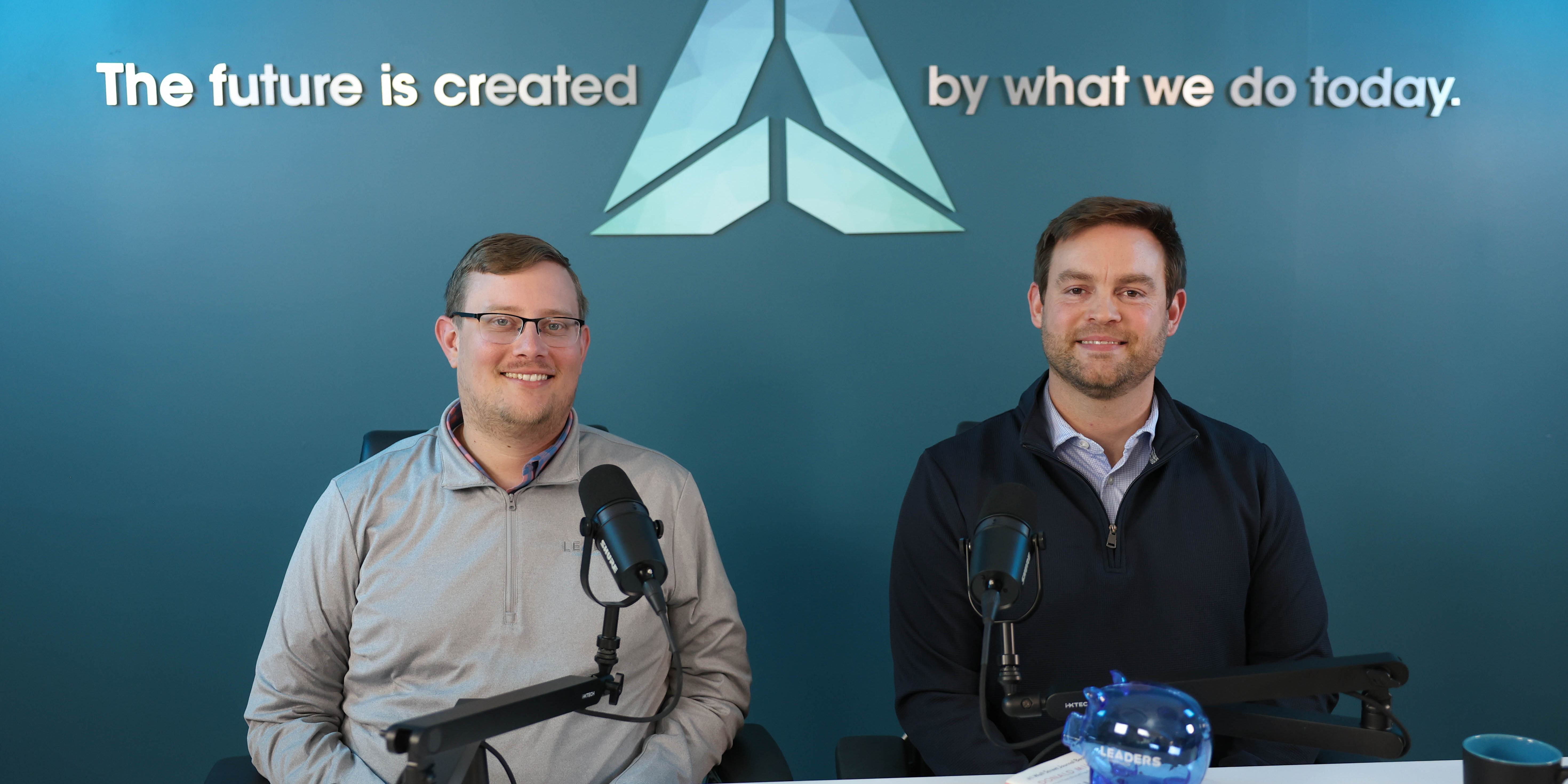
Episode 94: Pocket Change Podcast
Key Takeaways
- Build your savings step-by-step.
- Set up automatic transfers for an emergency fund.
- Credit unions are member-owned and not-for-profit.
- Financial literacy is a key topic for young adults to know.
Summary
What is the difference between a bank and a credit union?
Credit unions are member-owned and not-for-profit while banks are for-profit financial institutions with shareholders. Being member-owned allows credit unions to prioritize their members and typically offer better rates and greater community involvement.
What makes Union City and Obion County so special?
For Nick, it’s the tight-knit small-town community. Reelfoot Lake is close by, making it an interesting spot for tourism. Usually, people who are there have deep family connections and involvement in their towns.
What are some common hurdles you see our members face?
In a very financially turbulent world, there are a lot of unknowns and stress around people's money. For Nick and his team, the goal is to meet with their members one-on-one to help them with the challenges they're facing. It also supports financial education through Leaders Credit Union’s online resources, including the Pocket Change Podcast, articles, online financial classes, and more.
What advice would you give someone who is in a tough financial situation?
Start with savings, one step at a time. The more consistent and frequent you can be, the better off you’ll be in the future. Those small improvements can help you make bigger decisions down the road. Creativity is necessary for tough situations to figure out maybe different ways to help others get out of a tough situation.
What story have you seen that made an impact on the member?
Nick has recently seen a member make a huge transition with a debt consolidation goal. They were able to work together, and now the member is in a healthier financial spot.
What financial habit do you wish you started earlier?
Saving more money! Nick recommends setting aside money intentionally and building an emergency fund by having automatic transfers. Also, be sure to keep your emergency fund in an account you won't touch and leave strictly for savings.
What are some ways the Union City branch and team are involved in their community?
Many of the Financial Champions at the Union City Branch have their children in the local schools. Leaders also provides financial reality classes and mock interviews for students, and they have partnered with the Discovery Park and the Obion County Fair.
They also give through Leaders with Love each year, either through a Pay It Forward campaign or a service project they do together to serve and give back during the holiday season.
Why is it important to talk to young people about money?
Since children are constantly taking in new information each day, they need trustworthy, accurate resources for financial literacy. This could help them in their current and future financial journey.
What's the best piece of financial advice you've ever been given?
For Nick, it’s to save early and save often. Practically, that could mean cutting back on one trip to the coffee shop or restaurant or saying no to one extra purchase.
Looking for resources to help you in your financial journey? Visit leaderscu.com/financial-wellness/tools to get connected with a financial counselor, take online education courses through Freedom Path, and discover more Pocket Change Podcast episodes.
The Pocket Change Podcast is presented by Leaders Credit Union. To learn more about Leaders, visit leaderscu.com.
Listen and Follow


Full Transcript
Shea:
Hey, this is Shea. Welcome to the Pocket Change Podcast. You'll learn better ways to spend, save, and invest and take control of your financial journey. Carrie couldn't make it in today, so I'm doing the podcast solo, but she'll be back at our next episode. Today we have our AVP from our Union City branch here in West Tennessee. He's going to talk about saving early and often and why it's important to support our local community. We're excited to welcome our guests, Nick Wisdom, our financial champion here at Leaders. Welcome to Pocket Change, Nick.
Nick Wisdom:
Happy to be here. Thanks for having me.
Shea:
Yeah. So, tell us a little bit about how you got to Leaders.
Nick Wisdom:
Absolutely. So, I'm an Obion County native, born and raised here in West Tennessee. Married to an incredible wife for 17 years. Have an eight-year-old Yorkie-Schnauzer mix named Lambo, named after the Green Bay Packers, of course.
Shea:
Okay.
Nick Wisdom:
An adult daughter who lives in the Northwoods of Minnesota. So, kind of conflicting borders there between Wisconsin and Minnesota. Professionally, I started most of my career in retail management, working in wireless retail before transitioning into banking. For a few years, there, had a bit of a relocation and, really just kind of wanted to do something different but still keep aligned with my leadership background. And so, kind of an easy move into banking. My wife had worked in banking for a while and so was familiar with the career aspect of it all. And so, just really kind of paralleled well. So, worked in banking for a few years before kind of coming across Leaders and having sent some of my own clients to Leaders for assistance and some things that I wasn't able to really do or accommodate on my end, and just really got intrigued and interested. And so, just really kind of wanted to look deeper into it and kind of get an idea of what Leaders was as an organization. And I think that just really attracted me to that people helping people culture.
Shea:
Yeah.
Nick Wisdom:
And just really kind of wanted me to be a part of that.
Shea:
How long have you been here now?
Nick Wisdom:
I've been here four years. It’ll be four years next month.
Shea:
Congratulations. Yeah. That's great. So, what are some of the differences between banks and credit unions? You've worked at both and probably get to tell people a little bit about that difference.
Nick Wisdom:
Yeah, so the biggest difference I would say is going to be that that structure. So, at a credit union we are member-owned, not for profit. So that really allows us to shift our priorities elsewhere, by providing those more attractive, typically more attractive rates, savings options, borrowing solutions, that sort of thing, but really also just the way that we're able to work alongside our members. I feel like it's just a big difference that we're able to offer.
Shea:
Yeah, you mentioned people helping people. That's kind of like a credit union mantra that, you know, we use because we are, you know, people who came together and formed a group to bank and lend together. So, we're people helping people. So, I think that's a great thing that we keep in the back of our minds just to help others and serve our community. So, from Obion County originally, what makes Union City and Obion county so special and a great place to be?
Nick Wisdom:
I think there's just a lot of appeal to that small town area. We're a very tight knit community. You've got Reelfoot Lake right there. That's a big draw from outside the community for hunting and fishing reasons. I also think that it has very deep roots. So, as mentioned, I relocated, but was able to still come back. That's where all of my family kind of originated. And so, I think that goes a long way. I think we have a lot of local people who were born and raised there, have family ties there. And just really just kind of set up shop there. It's kind of like “Cheers.” You’ve got that, everybody, you know, knows your name, type of vibe, mentality. And I think that just goes a long way.
Shea:
Yeah, I think that's true. A lot of these rural and smaller communities have such strong, you know, family backgrounds and ties and great communities that we get to serve in each day. So, you know, you're our AVB and our branch. And so, you see members every day. So, what are some of the common hurdles and things that you're trying to help members overcome in the branches?
Nick Wisdom:
I think right now we are navigating a pretty complicated financial world. I think if you tie in inflation and rising gas prices and groceries, I think people are really just trying to find a way to, to get by. To make their paychecks kind of stretch a little further. Maybe more so than, than ever. And so really that tends to be the biggest hurdle is, is how can we help someone achieve their goals or find solutions that they haven't already thought of? And the other biggest thing is just I don't know that there's a lot of active resources that's available, or at least wide known, that we're able to provide completely free, through consultation, through our wellness courses, online, through our website and just different avenues. And I think the biggest thing that we're able to do is just work side by side with them. Through it all.
Shea:
Yeah. I think, you know, we try to provide, I guess, meet people where they are, right?
Nick Wisdom:
That’s right.
Shea:
Like, you know, you want to come in and talk face to face, and we've got, I think you and some of your team are certified financial counselors at the branch. And so, you have a little bit of, you know, more background knowledge. You can help, you know, people in tight situations. And of course, with our resources on our website, our blog, hopefully this podcast, you know. So, I think that's great that you mentioned, hey, it may not be known, but it's here. We want to push it out, you know, whatever, however a member can access it - or a listener. So, what advice would you give someone who feels like they're in a tight spot?
Nick Wisdom:
Really just kind of break it down to the minimal. Oftentimes it starts with savings. And I think that if you really just start small and make that frequent and consistent, overall that can, that can help you in the long run. And also, if you think of it similar to going to the gym or exercise. Transformation doesn't start overnight. It starts with consistency. It starts with getting in there at least once or twice a week, making little improvements. And that's where you'll see the return.
Shea:
That's right.
Nick Wisdom:
Obviously, we see a lot of members that come in that are already kind of beyond that point, that maybe don't have that savings in place, but need a solution now. And so really, sometimes it just takes creativity and just working, like I said, side by side with them and figuring out what resources we have available, whether it's through Leaders, through the community, or just getting creative with that structure.
Shea:
And so, do you have any stories of a memorable financial turnaround that you were able to walk a member through and see happen?
Nick Wisdom:
Sure. I think there's plenty. Recently, though, one that I can think of is kind of a debt consolidation effort. The member just had a lot of money going out, very little coming in to offset that and really just kind of worked together with him to just kind of give him a channel, an avenue for those finances. Start at the top and then just kind of work down from there. We were able to accomplish that goal and as of right now he's got some savings that's starting to build. He's no longer feeling that pressure of that debt burden. And he's in a lot better place.
Shea:
Yeah. That's, and you know feeling that pressure kind of can lead you to a place where you can't think about other things, you know, that may be, or seem rational because you got this other pressure. So, I think being able to relieve that, you know, just a little bit of somebody can be helpful. Is there a financial habit you wish you started earlier?
Nick Wisdom:
Yeah. Savings might be the theme of the day. So, I would say savings for sure. I think you can't go wrong with that. An emergency fund is probably one of the most critical things, as an adult that we can have set aside. It's not a matter of if. It's a matter of when. Emergencies are going to happen. It's inevitable. And so, just setting a little bit of your paycheck aside every single month, whether it's an automatic transfer or something that we can actually do, is just put in an account either at a separate financial institution if you need to, or in an account that you're hiding on your mobile app, that you're just not seeing a little out of sight, out of mind.
Shea:
Right.
Nick Wisdom:
So, just put it in there where you can't see it. Save it for a rainy day, perhaps, and just don't touch it. That's the biggest thing.
Shea:
Yeah. I mean, start small with the kids, with these piggy banks.
Nick Wisdom:
That's right.
Shea:
And continue it on through our entire lives. Because, like you said, it's not if, it's when. And it's better to be prepared than not. So, a lot of the team up there is, of course, has roots in Union City and Obion County. And so, what are some of the ways y'all are involved up there in the community?
Nick Wisdom:
Yeah. There's a lot of partnerships that we have going on, I would say. So, like you said, the majority of our team do have roots there in Obion County. Many have kids in school there or went through those school systems. So, we do partner well with the school systems locally, in Union City and Obion County.
Shea:
Right.
Nick Wisdom:
We set up some financial reality classes. We participate in the career fairs. They have, we do some mock interviews, which I think is really important.
Shea:
Yeah.
Nick Wisdom:
Just to give seniors the ability to kind of go through that interview process before they actually get out into the real world and start having those interviews. That's going to potentially set them up for success in the future.
Shea:
Sure.
Nick Wisdom:
So, kind of helping critique those conversations and get them headed in the right directions. We've partnered well with the Discovery Park, hosting some exhibits. We've partnered well with Obion County Fair. So, we, and the Obion County Hometown Walk of Hope is another big one that we volunteer with. I think, annually, we do our Leaders with Love, as well. So, just finding ways that we can share, our love for the community and just our local network.
Shea:
Yeah. I think you mentioned, like, those organizations like Discovery Park or the Walk of Hope. I mean, all those local community organizations doing great work and of course, our member appreciation day at Discovery Park, you know, just a way we can give back to our members and to the community. So, it's great that that's there right in our, you know, backyard that we can kind of promote and share with our members. I think it's really good. Why do you feel like it's important to, you know, talk to young people about, you know, finances? You talked about some of the reality fairs, which is like a budgeting simulation for students. And why is that so important to you?
Nick Wisdom:
Yeah, I think the youth is just, of course, they're very impressionable. I think they have the capacity to absorb a lot of information. I think we do great with getting the basics, the, the math and English and everything else. But I do think that finances is just as important as those pieces of knowledge that they obtain in the education system. So, getting those fundamental foundations in place where they're going to set themselves up into adulthood, getting those savings in place, getting the understanding of just financial literacy. I think it's just vital for their future success.
Shea:
Yeah, and hopefully we can get some young kids and their Future Leader account, and they can get money for good grades.
Nick Wisdom:
Oh, absolutely.
Shea:
And, you know, start saving early. So, that's a great way to do that too. How do you see the credit union making a difference in Obion County?
Nick Wisdom:
Well, hopefully we're doing that in a lot of ways that maybe aren't so visible, just incrementally, just in the way that we interact with our members and just kind of living out our purpose. But I do think that we do have a lot of folks coming in that are seeking answers and, and solutions and maybe, either through past experiences or just a lack of confidence, are approaching leaders as a source of help. And I think that we're able to do that with just kind of treating them the way that we would want to be treated.
Shea:
Yeah.
Nick Wisdom:
Just making sure that we're, working with them side by side and just every step of the way that we can. I think that's one big way that we're doing it, in addition to sponsorships and everything else that we're able to provide.
Shea:
I know you and your team do a great job representing Leaders and supporting the community and really helping our members when they need it. And so, we appreciate that. What is the best piece of financial advice you've ever been given?
Nick Wisdom:
If you can guess it, save early, save often. Yeah, that's probably the best thing that I've been told. It's a common theme when I'm talking to my members about their own finances. Little amounts you're not going to miss. It may mean cutting back on one extra meal per week. One extra coffee. It doesn't have to be something extravagant. A lot of people think saving hundreds of dollars at a time is what you need to actually get something that's going to be sustainable for growth. But the reality is, it often just starts with just splitting your paycheck. Go to your HR department, have a piece of your payroll go into that savings account. So that way you're not physically making the move. And it's less on your mind. And just let it sit there. Once you have something in place, then you can start getting strategic with it and, and worry about the actual investment side of it, but just start with the savings.
Shea:
Yeah. That might be the title of this podcast: “Save Early, Save Often.” That's great. So, if you make sure of pocket change in your pocket, just a little bit of change, what would you spend that on?
Nick Wisdom:
Yeah. Well, if you think about some of the things we've talked about today, that the guess might be put it in a high yield savings, but I'm going to say probably Green Bay Packers tickets or merchandise would be a pretty good chance.
Shea:
Maybe like a keychain.
Nick Wisdom:
A better chance might be it might become my wife's pocket change. I don't know.
Shea:
So, you can get a Packers keychain, or your wife. She’s got it.
Nick Wisdom:
Coaster. Yeah.
Shea:
Something.
Nick Wisdom:
Yeah.
Shea:
All right. Well, we appreciate you being on today and sharing this advice with our listeners. And we appreciate all you do for our Union City and Obion County community.
Nick Wisdom:
Thank you.
Listen and Follow


