








Published: May 15, 2026
Buying a car, whether brand new or used, is a significant financial decision. From knowing which brand to choose, the best make and model, to which has the best mileage, and how much it costs to upkeep, there’s a lot that goes into your decision and how much you need to spend on the initial purchase and upkeep.
From creating a budget and getting pre-approved for an auto loan to finding the best deals and taking the final steps to purchasing, we’ll break down what you need to know in this article.
Key Takeaways
- Create a budget before you get pre-approval, and refine it after approval to get a realistic idea of what you can afford.
- Pre-approval could help you get a better deal than walking into a dealership.
- Your credit score plays a major role in what kind of rates you’ll get on your auto loan.
- Whether buying from a dealership or a private seller, be willing to negotiate to get the best deals.
Should You Set a Budget Before Getting Pre-Approved for a Car?
Yes, you should always set a budget before requesting pre-approval for an auto loan. This gives you a realistic idea of what you can afford and helps you avoid overspending on your new car.
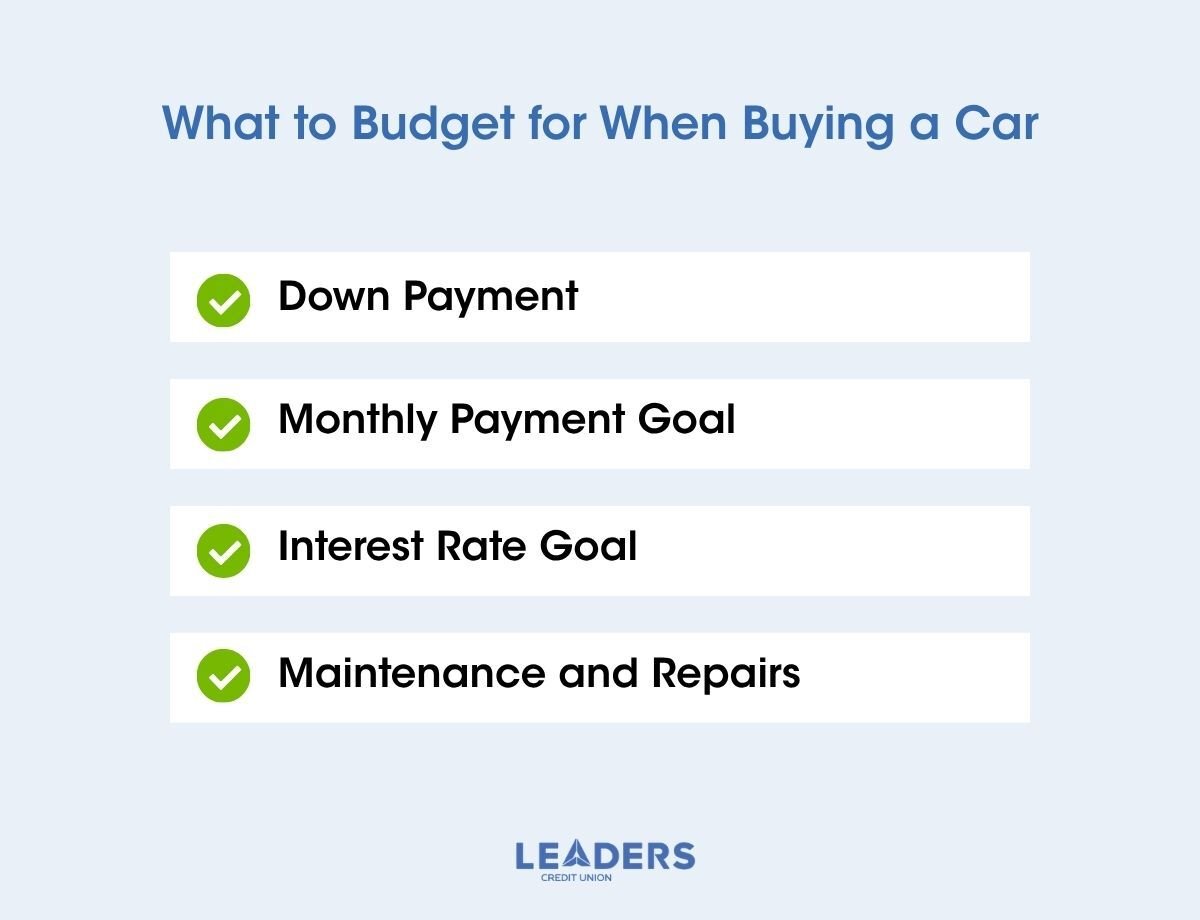
Here are the key items to consider for your budget:
1. Down Payment
The down payment is the amount of money you put towards your vehicle before taking out your auto loan, and the more you put down, typically, the better your rate will be. This is a good first step before you calculate your monthly payment goal, since it could help bring the cost down of what you’ll owe. A good percentage to aim for to save for your down payment is 20% for a new car and 10% for a used car.
2. Monthly Payment Goal
After you consider how much you want to contribute for your down payment, it’s time to consider a monthly payment goal for your auto loan. This will make an impact on your finances each month because it’s debt you have to pay, so be sure to take into account what you’re already spending and what you have room for or don’t have room for in your budget.
If you’re unsure what you can afford, try using a car affordability calculator to have a better idea of what your desired loan term is, your set down payment, and if you have any trade-in value from another car you’re looking to sell.
3. Interest Rate Goal
An interest rate goal is how much you’re aiming to pay in interest on your auto loan. Remember, the lower the interest rate, the less you’ll have to spend overall, so you want to be sure you find the best auto loan rates in the market to find the best deal.
The typical interest rates for new-car auto loans are 6.37%, and for used-car loans, 11.26%. Credit unions, like Leaders Credit Union, typically offer lower interest rates on auto loans. The current auto loan rates at Leaders are as low as 4.49% APR¹.
One of the most significant factors in your rate is your credit score. Here are the typical car loan rates for each credit score range:
781-850 - 4.66% for new car loans, 7.70% for used
661-780 - 6.27% for new car loans, 9.98% for used
601-660 - 9.57% for new car loans, 14.49% for used
501-600 - 13.17% for new-car loans, 19.42% for used
300-500 - 16.01% for new car loans, 21.85% for used
As you can see, your credit score plays a wide role in determining how much interest you’ll have to pay on your auto loan. That’s why it’s important to recognize what your credit score is and how it will impact your rate. When making your budget, be sure to factor in how much you realistically aim to spend on your interest rate.
4. Maintenance and Repairs
Whether you’re purchasing a brand-new car or a used one, every vehicle will need maintenance and repairs. These could include basic upkeep, like oil changes, new windshield wipers, or replacing them with new tires. However, some expenses could be much more sudden and expensive, such as a sudden hole in your tire from a pothole or a crack in your windshield.
Having adequate funds saved for these situations is key to protecting your financial security, and knowing you’ll have the room in your budget to cover them is essential before you buy your vehicle. So how much should you set aside for these expenses? According to the American Automobile Association (AAA), aim to save 11 cents per mile you drive in your car per year.
This will look different depending on how much you drive. According to the U.S. Department of Transportation, Americans drive an average of 13,662 miles per year, and around 1,138 miles per month.
If you spend 11 cents per mile, that means you’ll spend $1,502.82 per year on car maintenance. This is important to include in your car budget as you shop for your new vehicle, to ensure you are prepared for the financial adjustment of owning one.

What is Pre-Approval and What Do You Need for It?
Pre-approval means your lender has reviewed your information and agreed to lend you a specific amount for your car purchase, usually at a set interest rate. This shows you’re a qualified borrower and gives you a stronger negotiating position when you shop for a vehicle.
What do you need to provide for the pre-approval process?
Before getting pre-approved for an auto loan, be sure to bring the following:
- Valid ID
- Proof of Income & Employment
- Proof of Insurance
- Proof of Address
- Proof of Funds
What do lenders look at during the pre-approval process?
Lenders look at your payment history, current income, assets, and debt to decide if you’re a reliable borrower. Good credit and steady income improve your chances of pre-approval and better rates.
How Do You Find the Best Deals While Car Shopping?
Yes, you should always set a budget before requesting pre-approval for an auto loan. This gives you a realistic idea of what you can afford and helps you avoid overspending on your new car. Here are the key items to consider for your budget:
Buying from a Dealership
When you choose to buy from a dealership, you’re choosing to work with a company that has an overall inventory. Here are some ways you can find the best deals:
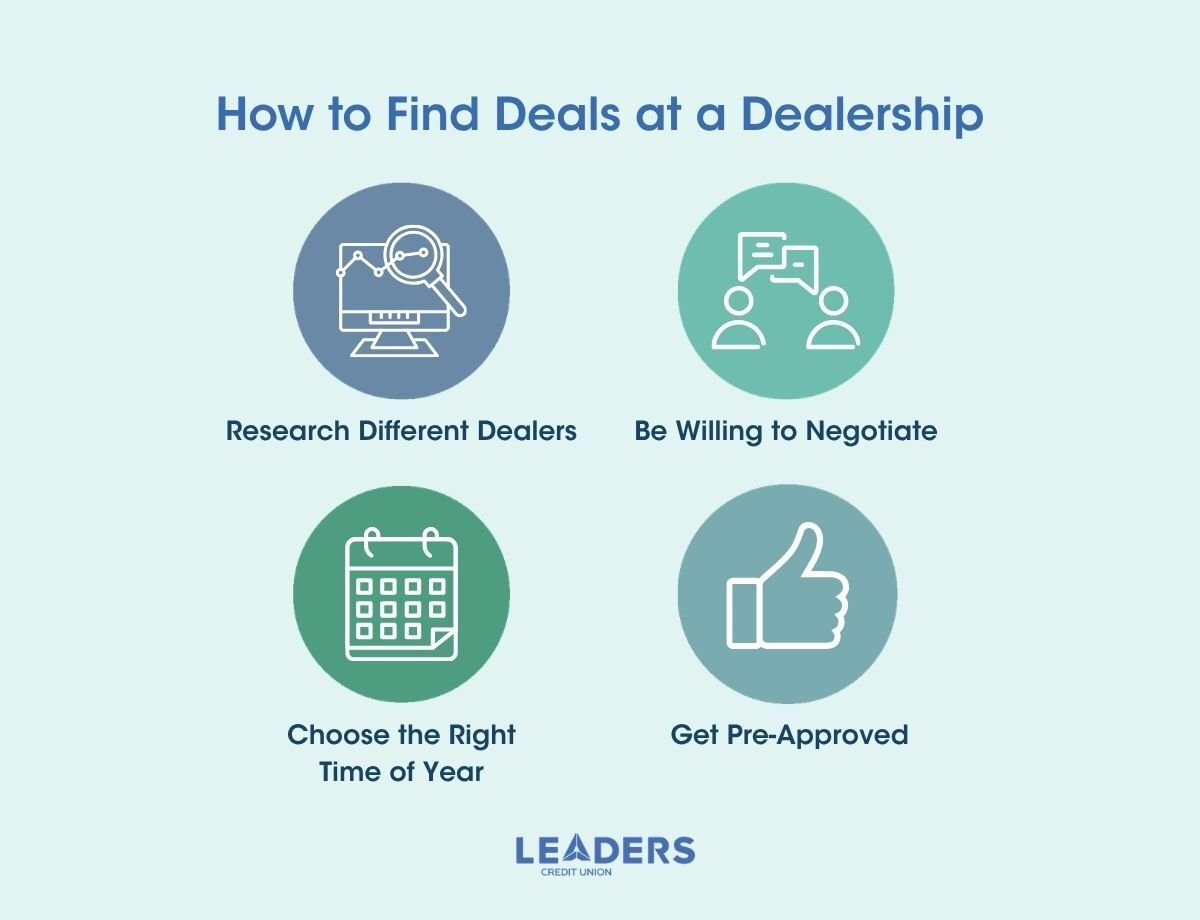
1. Research Offers at Different Dealers
Like any major purchase, you want to be sure you’re finding the best discount, quality, and service of the product you're buying—cars are no different. Make a list of dealerships, vehicles, and colors to compare and see if you can find the car you want within your budget. Also, be sure to test-drive your top choices so you can actually know if it’s the one you want.
Look up reviews for dealerships and cars online to see what other customers have to say about their experiences. Here are some sites where you can research:
2. Choosing the Right Time of Year
When purchasing a new car, it’s important to keep in mind the likelihood of when you’ll find the best deals. One of the most prominent times to buy is at the end of the year, such as October through December. At this point, dealerships are trying to sell as many cars as they can before the year ends and meet their sales quotas.
Another time where you might find the best deals is at the end of the month or quarter. While summer is a busy time for car buying, it could also be a good chance to find a deal since it’s the end of a model year before car companies debut their new models in the fall.
3. Getting Pre-Approved
Pre-approval on your auto loan could help you find a better deal because you’ve already gone through the steps to secure your lender's stamp of approval. Since car dealerships can check whether you’re approved, they might be willing to negotiate a lower rate to compete.
4. Be Willing to Negotiate
Don’t settle for the sticker price. Try to bring the price down by working with the dealership. Before you begin negotiating, ask about the “out-the-door” price, which is the final price if you were to bring the car home today. This includes the car's price, dealer add-ons, registration, sales tax, etc.
Buying from a Private Seller
When buying from a private seller, some of the same rules apply as when buying from a dealer, but here are some things that you should keep in mind:
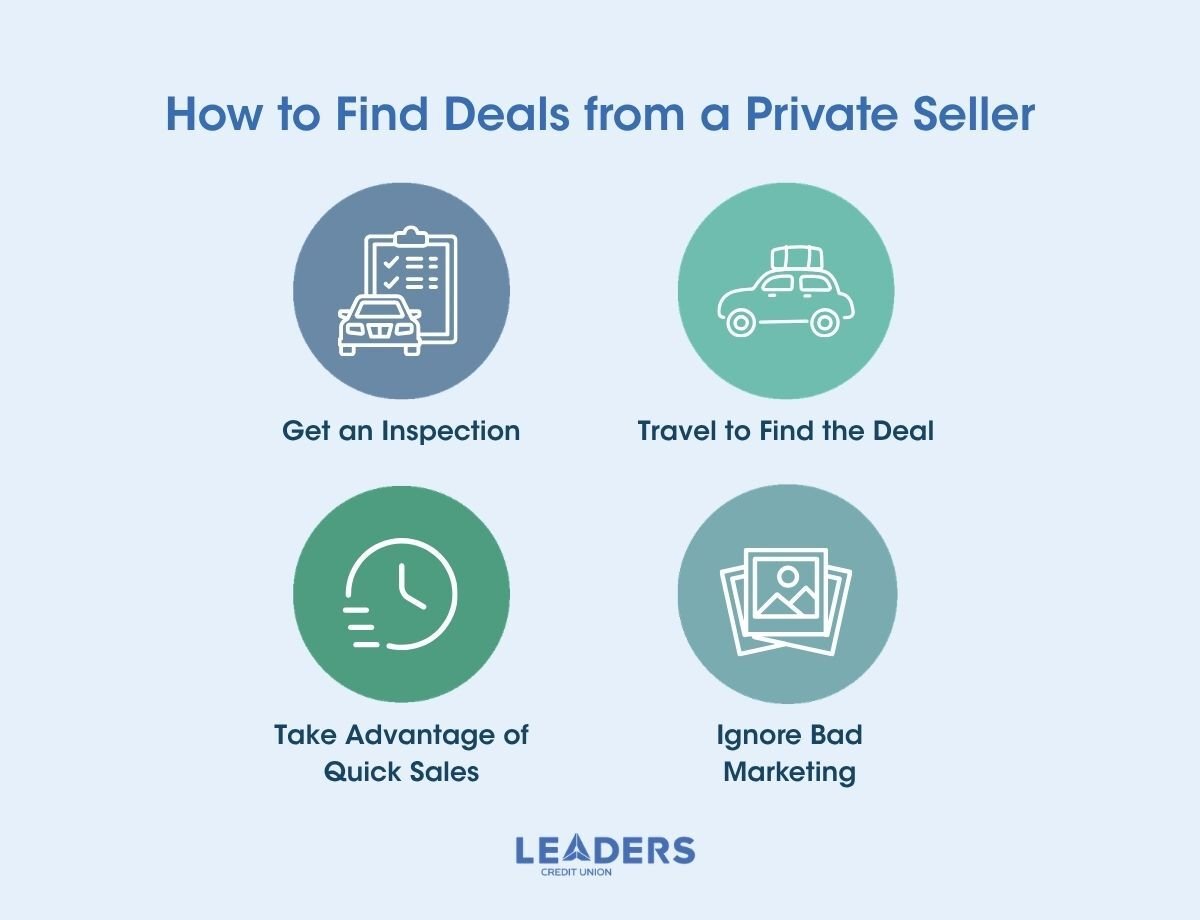
1. Get an Inspection
Similar to a house, you want to be sure the car you’re driving is safe, dependable, and up to the standards it needs to be, especially since it was owned by someone before you. You want to ensure the seller is truthful about the vehicle's condition. This avoids any unnecessary surprises down the road, which could protect you from unnecessary expenses.
2. Take Advantage of Quick Sales
While dealerships are more likely to stand firm on the vehicle’s price, private sellers tend to be more willing to negotiate for simplicity. A few reasons private sellers sell their vehicles might be recently buying a new one, moving, or no longer needing an extra vehicle. They tend to be more focused on getting rid of the vehicle to make it easier for them.
3. Be Willing to Look, Even if It Looks Unprofessional
Take a chance to look at a used vehicle, even if its marketing isn’t professional. Just because a seller isn’t good at marketing doesn’t mean the deal they’re giving isn’t legitimate. Go see for yourself what the vehicle looks like and its condition—you might be surprised!
4. Travel to Find the Best Deal
Your dream vehicle might not be in the same town you live in. After researching and shopping online, you might realize the best deals for the car you’re looking for are in a neighboring town or in another part of your state. Choosing to take the time to travel and buy the car from that dealership or private seller is definitely worth it, compared to overspending on the same car.
What Should You Do When You're Ready to Buy?
When you’re ready to buy, follow these final steps to close the deal quickly and confidently:
1. Take One Final Look at Your Budget
Once you’re ready to buy the car, it’s time to do a final look back at your budget. Now that you know the full cost of the car, have planned for maintenance and repairs, and are ready to take on an auto loan, you are as prepared as possible to take on the responsibility of buying a new vehicle.
2. Have the Proper Documents
-
Driver’s License
-
Proof of Insurance
-
Down Payment Check
-
Pre-Approval Documentation
3. Negotiate
Even if you’ve already negotiated with the dealer while looking at the vehicles, negotiate more throughout the buying process. Be sure they’re staying transparent about pricing, the vehicle’s condition, and any additional fees they try to add on. Make sure to avoid any unexpected surprises in the total cost. Make sure to ask lots of questions about add-ons to make sure you understand the commitments you are signing up for, especially when buying from a dealership. This makes your budget clear and shows you’re sticking to it, even if it means losing out on the car in the end.
4. Study and Sign Paperwork
It’s time to seal the deal, but it's crucial that you know exactly what you’re purchasing. Look over the fine print again to make sure you understand what you’re paying for, and remove any unwanted add-ons. Before you leave the dealership or meeting place with the private seller, be sure to have all the paperwork you need.
5. Don’t Leave Without Keys
The vehicle is now yours! Just be sure, in your excitement, not to forget these essential items: the owner’s manual, spare tires, a charging cable for an electric or hybrid vehicle, and all key fobs.
FAQs for Buying a Car
Q: How do I find the best deal at a car dealership?
A: To find the best deal at a car dealership, research prices at multiple dealers, compare incentives, and don’t be afraid to negotiate. Timing your purchase at the end of the month, quarter, or year can also help you save.
Q: How do I know if a car is reliable when buying from a private seller?
A: Always get a professional inspection before buying from a private seller. An inspection confirms the car’s condition and helps you avoid unexpected repairs after purchase.
Q: When is the best time of year to buy a car?
A: The best time of year to buy a car is October through December, when dealers are clearing out inventory and try to meet sales quotas. End of the month and quarter are also good times to shop for a better deal.
Q: How much should I save for a down payment on my car?
A: Aim to save at least 20% of the purchase price for a new car and 10% for a used car as a down payment.
Own Your Road with Leaders Credit Union
Are you ready to buy your dream car? Let us help you along the way! Stop by one of our branches or call 731-664-1784 to speak with a Financial Champion.
Want more information about the steps to buying a car? Check out our free First-Time Car Buyers Checklist or read our other article, “Buying Your First Car? Exploring Auto Financing for First-Time Buyers.”
Leaders is federally insured by the NCUA.
Disclosures


