








Published: March 6, 2026
Daily money habits that build long-term financial strength include setting S.M.A.R.T. goals, sticking to a budget, paying off debt strategically, and contributing regularly to retirement savings. These habits reduce financial stress, create stability, and help your wealth grow steadily over time.
What is long-term financial strength?
Long-term financial strength is the ability to enjoy financial freedom without being weighed down by debt, to secure your savings, and to be confident in your financial decisions. It’s the realization that your financial choices now will impact what choices you can or can’t make in the future, so make the best one you can to set yourself up for success.
Not sure what steps you need to take to do this practically? Don’t worry—we have this article to help you learn how you can develop strong money habits daily to help you reach your goals.
Key Takeaways
-
Set S.M.A.R.T. Goals to help you build practical and realistic expectations for your finances into Specific, Measurable, Achievable, Relevant, and Time-Bound action steps.
-
Stop overspending by building a budget and sticking to it with strategies like phone notifications, meal planning, and shopping at discount stores.
-
Intentionally pay off debt by using loan calculators and methods like the debt snowball or debt avalanche.
-
Prioritize contributing to your retirement now so you can enjoy your financial future by taking advantage of compound interest and any employer-matching programs.
What are S.M.A.R.T. Goals?
Building a strong financial future takes time and discipline, but with the right mindset, you can work to achieve your goals by making consistent daily progress. One of the most effective ways to work toward your savings goals is by using the S.M.A.R.T. framework.
S.M.A.R.T. stands for Specific, Measurable, Achievable, Relevant, and Time-Bound.
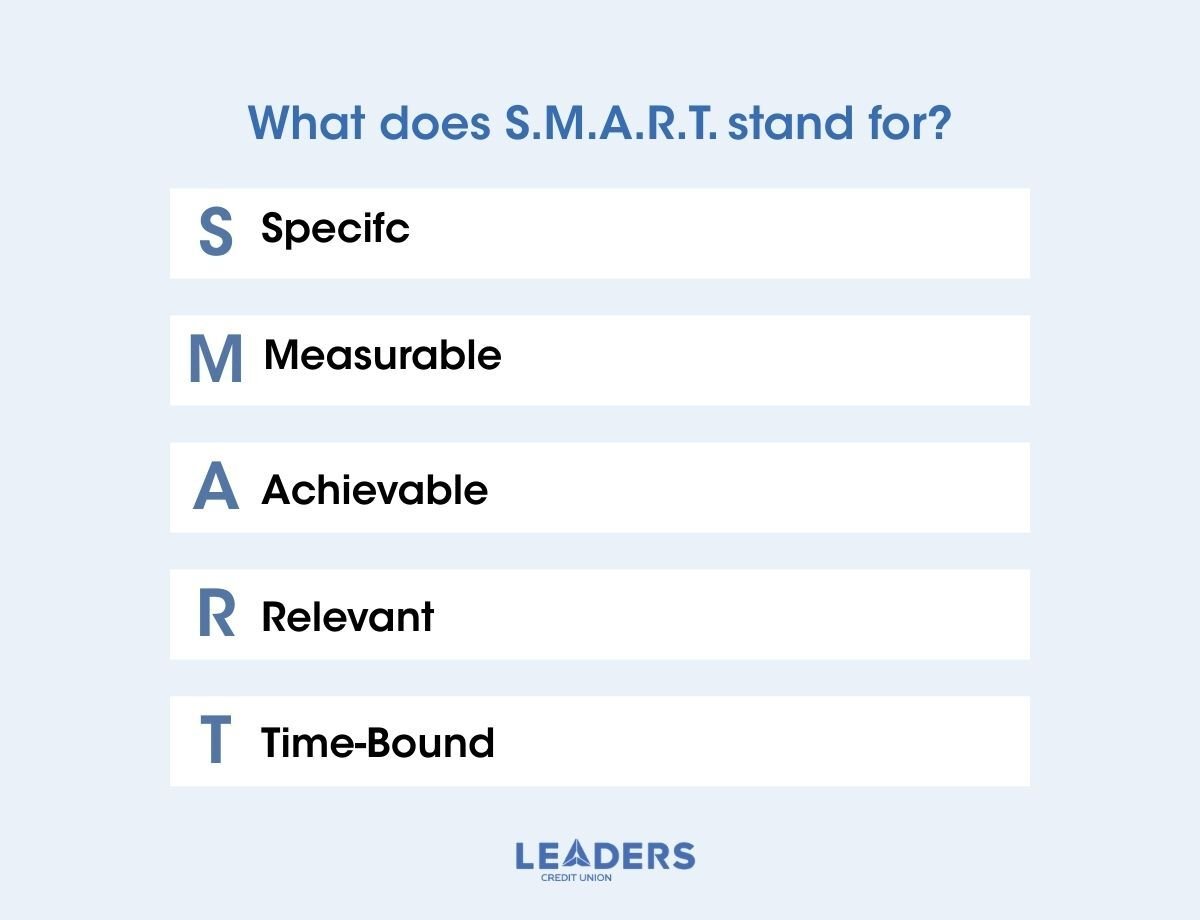
This goal setting strategy helps you build better money habits gradually, making your goals more manageable and less overwhelming. For example, instead of simply saying, “I want to pay off my mortgage in 5 years,” S.M.A.R.T. goals encourage you to break down the process into actionable steps. By focusing on incremental progress, you’ll find it easier to stay motivated and develop the discipline needed for long-term success. Like any skill, improving your finances requires time, patience, and continuous practice.
Let’s say you want to buy a new car for $30,000. What steps do you need to take to get there? Let’s implement the S.M.A.R.T. goals strategy:
Specific
❌ Don’t say: “I want a new car, and it will cost $30,000.”
✅ Try: “I want to save $30,000 to purchase a new car in cash.”
Measurable
❌ Don’t say: “I want to buy the car in 4 years.”
✅ Try: “I’m going to set aside $625 each month for 4 years to be able to save for the car.”
Achievable
❌ Don’t say: “I’ll just pull $625 each month no matter what.”
✅ Try: “I’m going to evaluate my budget to make sure it’s up-to-date, cut out $175 from excess spending, and set up automatic spending.
Relevant
❌ Don’t say: “I’m just going to do this without considering any other financial priorities.”
✅ Try: “I am not in any significant debt and have an established emergency fund.”
Time-Bound
❌ Don’t say: “I’ll just buy the car whenever I have the money.”
✅ Try: “I’ll save $625 a month for 4 years to buy a $30,000 car.”

How Do I Stop Overspending?
One of the biggest barriers to financial success is excess spending. While there’s nothing wrong with a fun outing to a local coffee shop or a shopping trip with your friends, it’s important that you’re being diligent to stay within your monthly budget.
Create a Budget
The first step to avoiding overspending is to create a clear, practical, and useful budget. Without a budget, you’re essentially playing a guessing game each time you spend money on whether or not it’s something you can afford. Often, you're likely spending more than you think. Having a budget is not only essential to keep yourself from overspending, but it’s also essential for your overall financial health, as it involves having a clear plan for where each dollar is going, whether it’s for spending, saving, or giving.
Stick With It
Having a budget is only useful if you actually stick with it. Whether you’re an experienced budgeter or it’s your first time, staying within a budget can be a struggle for anyone. Don’t worry—there are strategies you can use to help you build strong habits to have more self-control over your money so you can work towards your financial goals.
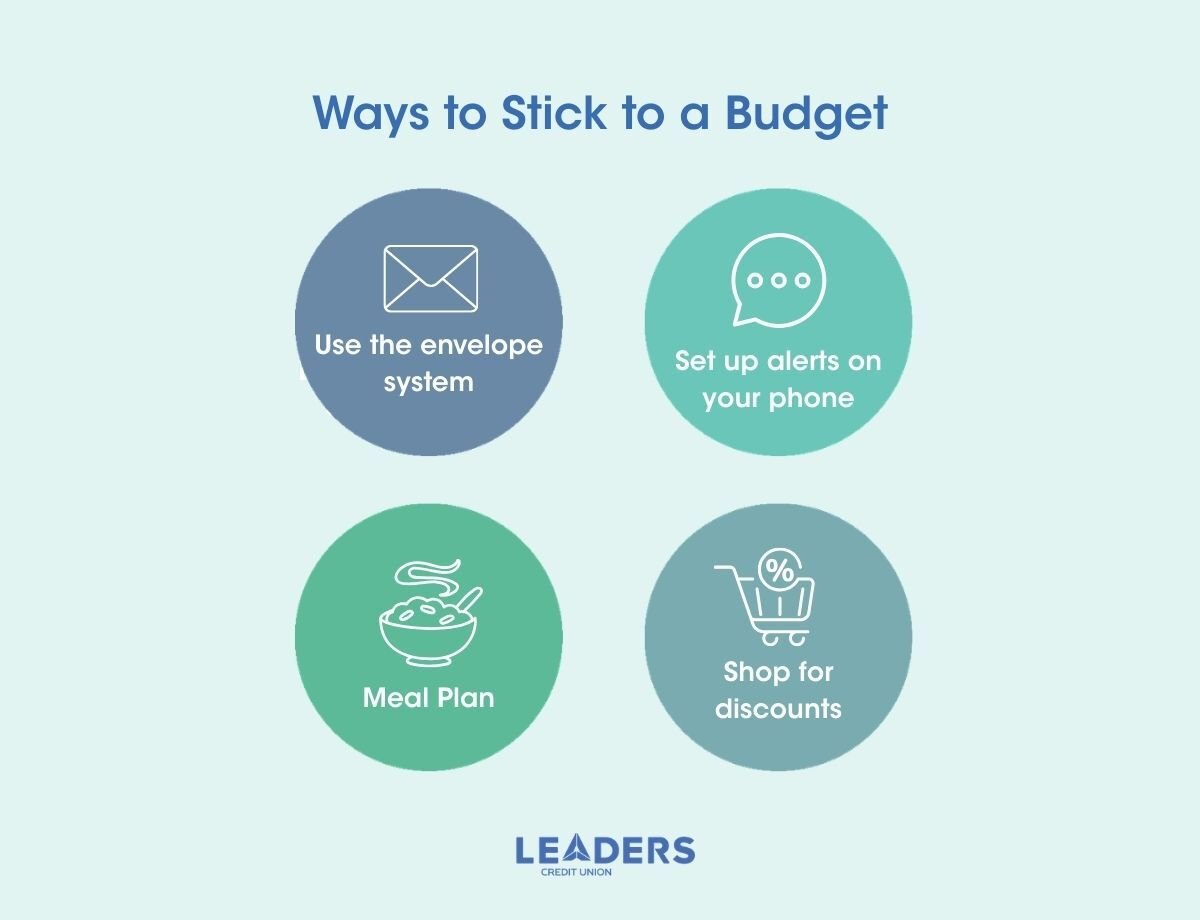
1. Use the envelope system.
This system separates categories of your budget with cash, so you can physically see where each dollar is going as you spend it. You could put your money in envelopes labeled with categories like “gas” or “eating out,” or use an envelope wallet to keep everything more organized.
2. Set up notifications on your phone.
Schedules stay busy, so it’s easy to lose track of when you’ve made a payment or haven’t. If you’re finding yourself spending too much of your budget too quickly, set up notifications through your financial institution to alert you when you’re getting close to the threshold of your budget.
Our Money Management tool on the Leaders mobile app can help you do just that!
3. Get more organized with meal planning.
An easy way to stick to your budget is to be more organized with meal planning. Making sure you’re prepped for the week, have enough groceries, and plan for the whole week will keep you from being tempted to eat out at a restaurant, since you already have what you need at home. Before you go grocery shopping, plan each meal for the week and make a list of all the ingredients you need to avoid multiple trips to the store.
4. Take advantage of discount shopping.
You can have fun shopping without buying the top designer or luxury brand items at full price. There are plenty of stores that offer discounts, marked-down items, and gently used items to help you get what you need without spending more than needed. Some stores to look for are discounted items are:
How Can I Intentionally Pay Off Debt?
No one wants to be bogged down by the stress of debt, no matter how big or small. A key way to quickly work towards a stronger financial future is to be dedicated to paying off your debt as quickly as possible. There’s a reason we suggest that you intentionally pay off debt. It’s so much more than making just the minimum required payment on your loan each month; it’s about being aggressive in your strategy to be debt-free as quickly and wisely as possible.
How can you do this while also being wise in your financial decisions?
Here are two ways you can improve paying off your debt:
1. Use a Loan Monthly Payment Calculator.
This is where having S.M.A.R.T. Goals will come in handy. You can use one of these calculators to see what a realistic monthly payment goal would be and when you could pay it off.
2. Use the Debt Snowball Strategy or the Debt Avalanche Strategy.
Both of these methods work because of their metaphors—both can be useful, but the one that best suits your approach to the end goal will work best for you. The Debt Snowball Strategy is when you pay off loans smallest to largest and gradually pay off until it’s all paid. The Debt Avalanche is the opposite strategy, where you pay off loans with the highest interest rate first, then the lowest.
How Can I Prioritize My Retirement?
No matter your age, prioritizing retirement is essential for a strong long-term financial plan. While retirement may feel far off, your decisions today have a major impact on your future financial security. Here’s how to start building your retirement nest-egg now:
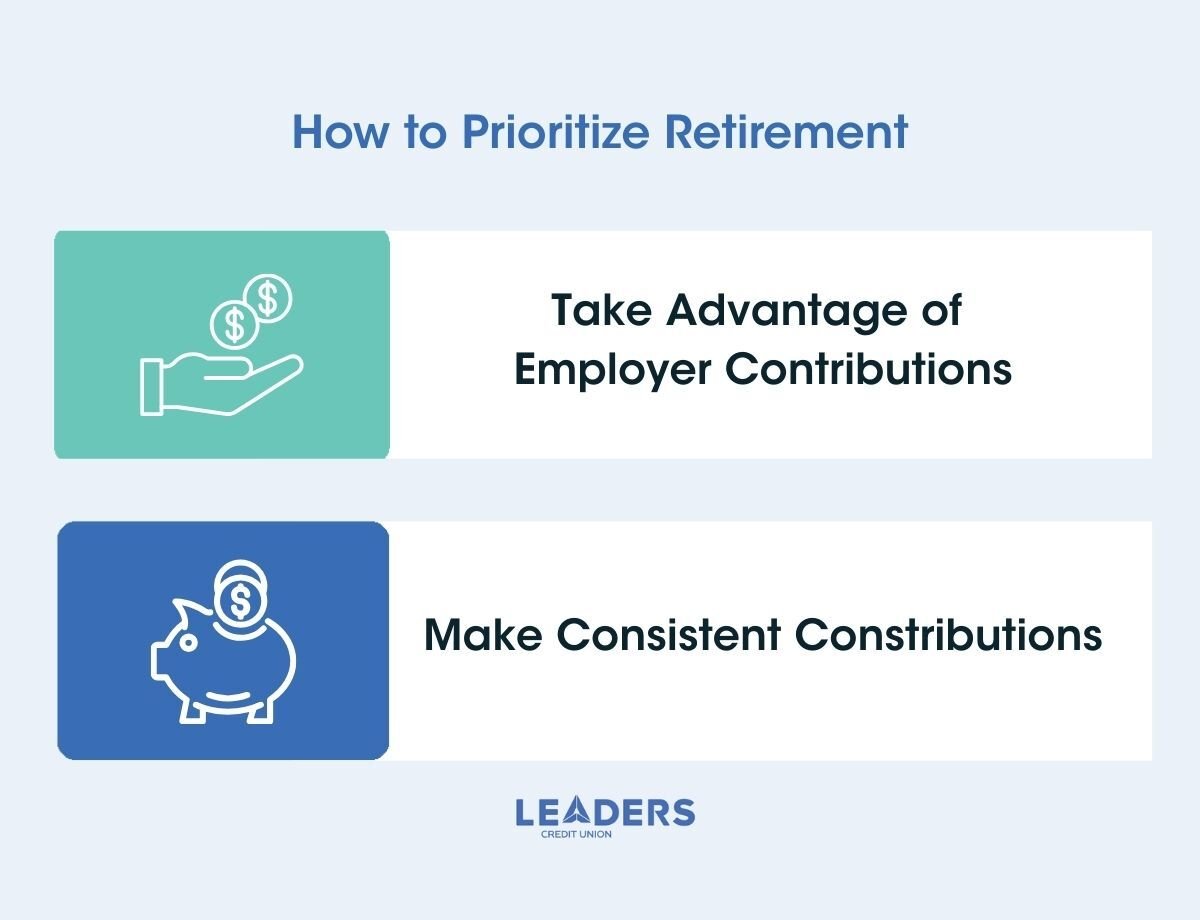
Take Advantage of Employer Contributions
If your employer offers a retirement match, be sure to contribute enough to get the full match—otherwise, you’re leaving free money on the table. Contact your HR department to learn about your company’s retirement plan and matching policy. Even if the match is a small percentage, maximize this benefit whenever possible.
Make Regular and Consistent Contributions
Set aside money for retirement each month as part of your budget. Even if you can only contribute a small amount, regular savings add up over time—especially with the power of compound interest. The earlier you begin, the more your money can grow, making it easier to reach your retirement goals.
FAQs about Building Strong Money Habits
Q: What are S.M.A.R.T. Goals?
A: S.M.A.R.T. stands for Specific, Measurable, Achievable, Relevant, and Time-Bound. Use this strategy when you want to establish goals for saving, spending, or giving your money.
Q: How do I stop over-spending?
A: Create a budget and stick with it. Keep yourself accountable by setting alerts on your phone when you’re getting close to overspending, shopping at discount stores, planning meals at home to avoid eating out of necessity, or using cash with the envelope system to keep track of your exact spending.
Q: How can I quickly pay off my debt?
A: First, make sure you know how much you can realistically afford to pay off each month by using a loan monthly payment calculator. Once you know, you can either use the Debt Snowball Method or the Debt Avalanche Method. The Debt Snowball Strategy is when you pay off loans smallest to largest and gradually pay off your debt until it’s all of it. The Debt Avalanche is the opposite strategy, where you pay off loans with the highest interest rate first, then the lowest.
Q: How do I prioritize retirement?
A: If your company has a matching policy to contribute to your retirement, utilize it so you can save more. Be sure to set aside money each month to take advantage of compound interest.
Want to start building strong money habits?
Talk to one of the Financial Champions at Leaders Credit Union by calling 731-664-1784 or stop by one of our branches. We have a variety of resources and financial tools to help you on your financial journey.
If you want to take a deep dive into your financial plan, schedule a Financial Counseling appointment.
Wanting to learn more ways to prepare for your financial future? Check out our free savings guide.
Leaders is federally insured by the NCUA.


