








Last updated: March 5, 2026
Having a small budget doesn’t exclude you from giving—it simply means giving must be a clear priority within your budget. Whether you’re living on your own for the first time or you’re a young married couple learning to manage finances together, giving can feel challenging. That challenge is often greater if you’re still learning how to budget well or if this is your first experience giving independently as an adult.
Don’t worry—we’ve got five practical tips to help you incorporate giving into your life so you can make an impact all year round.
Key Takeaways
-
You can give back on a small budget by prioritizing consistency over amount.
-
Giving isn’t limited to money—time, skills, and everyday kindness are equally valuable.
-
Micro-giving makes generosity sustainable and habit-forming.
-
Supporting your local community strengthens both individuals and the local economy.
Way #1: Give Your Time and Talent
While money is a common way to give, it's not the only way you can make an impact in your community. Giving your time by being of service to others could benefit a local soup kitchen, nonprofit, or foster family. There are so many ways you can give back without spending a dime, and you might be surprised by how many needs are right around the corner.
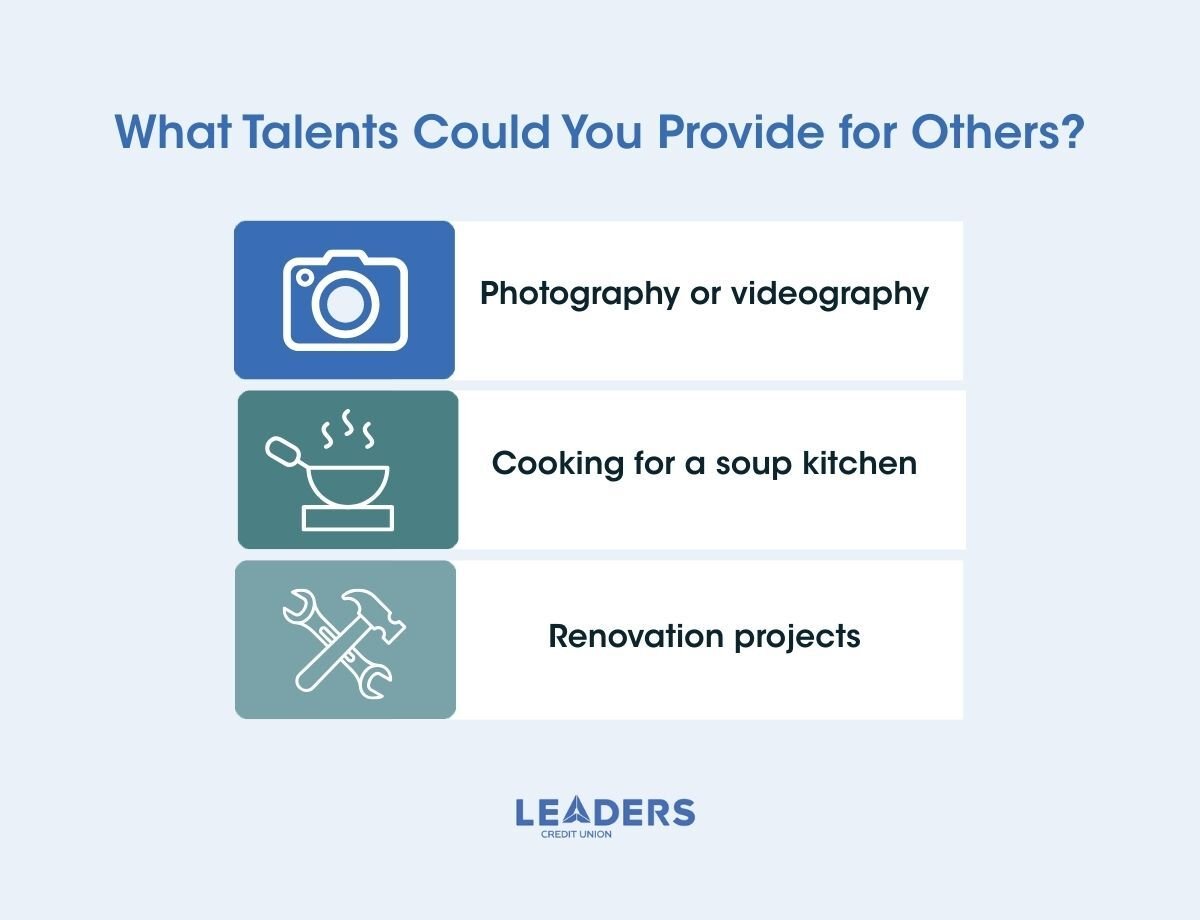
Along with service, be on the lookout for volunteer opportunities that require special abilities, such as photography, construction, or other unique skill sets you may have. If the place you're interested in serving doesn't mention any specific needs or projects, don't be afraid to ask. You never know what kind of needs they may have where you could be a blessing to someone else.
Pro Tip: Not sure which nonprofit you should serve in West Tennessee? Reach out to one of our Financial Champions. Leaders Credit Union is involved in serving multiple nonprofits across the region through sponsorships and annual Leaders with Love project. We'd be happy to share about ones we know are making an impact in our community.

Way #2: Make Micro-Giving a Part of Your Budget
As you consider how to give monetarily, you might feel inclined to give a significant donation all at once, such as around Christmastime or at a fundraising event for a nonprofit. Giving around Christmas and for special causes is important, but giving a huge amount one time isn't the point of giving your money. The key is to build a strong habit of giving throughout the year, not just one time.
A way you can learn how to give consistently is through micro-giving. Micro-giving is when you give smaller donations over time. For example, you might set aside $5 every time you go grocery shopping as a reminder to donate to a nonprofit that helps fight hunger in your community. Assuming you go to the grocery store at least once a week, you'd be giving an average of $20 per month, which equals $240 per year. This is the beauty of micro-giving—even small contributions add up quickly.
If you choose to make these types of donations to organizations like your church, a local nonprofit, or a family in need, you can make a significant impact by being a dedicated giver. As you give regularly and commit to your cause, you develop strong financial habits by practicing discipline. Just like any skill, giving takes time and practice, so consistency is key.
Way #3: Support Local Businesses
Another way you can give back to your community is by shopping local. This might not be an obvious way to give back, but it plays a key role in the vitality of local businesses in your town. When you choose to buy a Christmas present from a local boutique or a book from a local bookstore instead of ordering from Amazon, you're investing into the local economy and culture.
Some local businesses partner with nonprofits by donating a percentage of their sales to them. If you're unsure whether a business supports a local cause, check their website or social media pages to learn more about their community involvement.
![[ Download Free The Gen Z Guide to Grown-Up Money Decisions ]](https://no-cache.hubspot.com/cta/default/20761324/interactive-200889391957.png)
Way #4: Practice Everyday Acts of Kindness
Choosing kindness can turn around anyone's day and actively spread joy to others. Being generous isn't just about giving away money or doing a service project, it's about your heart and attitude. The way you choose to give is reflected in your heart, and if you're not sure where you feel called to give, start by asking yourself:
- Are there specific causes you're passionate about?
- Have you consistently heard about a need in your local community?
- Is there a problem you see that continuously goes unaddressed?
These questions can help you identify opportunities where you could make a meaningful impact. Practically, this could look like surprising a waitress with a $100 tip, checking in on an elderly neighbor who doesn't have family nearby, or doing yard work for a widow.
Giving and choosing kindness not only impacts others, it impacts you, too. Improved physical health, longevity, and fewer depressive symptoms have all been linked to giving.
Way #5: Share What You Already Have
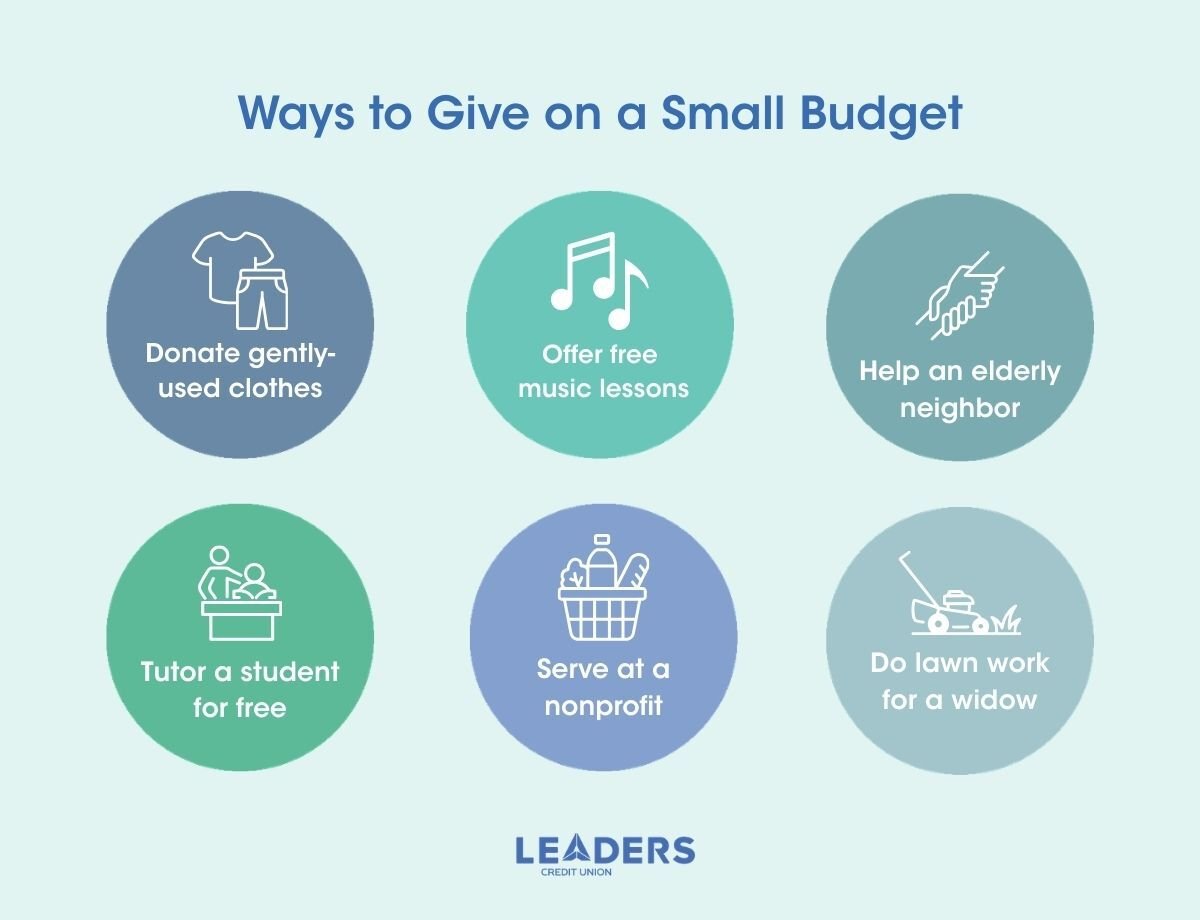
Sometimes the best gifts are the ones you can give forward. One way you could help someone else is by sharing items or skills you no longer need. For instance, you could donate gently used clothing to a foster family, offer free piano lessons to a child whose family can't afford them, help fix a broken faucet for an elderly neighbor, or tutor a student who is struggling in school.
More often than not, those who truly need help may not ask for it or even hint that they are overwhelmed. Be observant and keep your eyes, ears, and heart open for opportunities to step in and lend a helping hand.
FAQs about Giving on a Small Budget
Q: How can I give back on a small budget?
A: You can give back on a small budget by making giving a consistent habit. Instead of one large donation, give smaller amounts each month to create a sustainable impact over time.
Q: What is micro-giving?
A: Micro-giving is the practice of donating small amounts of money consistently over time. It’s an effective way to build the habit of giving while staying within your budget.
Q: What are some ways I can give?
A: You can give by meeting needs in your community, such as supporting a homeless shelter, helping an elderly neighbor with yard work, or donating gently used clothing to a foster family.
Q: How can supporting local businesses be a form of giving?
A: Supporting local businesses helps strengthen the local economy and community. Many local businesses also partner with nonprofits or donate to local charities, extending the impact of your purchases.
Build a Culture of Giving
At Leaders Credit Union, we love pouring back into our local communities, and we want to help you as you begin building the habit of giving. If you have questions about micro-giving or how to create a better budget, visit one of our branches or call 731-664-1784 to talk with a Financial Champion.
Wanting to learn more about how to manage your finances well as a young adult? free Gen Z Guide to Grown-Up Money Decisions.
To further develop your giving skills, read our other blog, "Budgeting Basics: How to Establish a Personal Budget."
Leaders is federally insured by the NCUA.


